James Hardie is the fiber cement siding most Northern California homeowners are weighing when they replace failing wood, stucco, or old composite cladding — and for good reason. Fiber cement is engineered from cement, sand, and cellulose fiber into a dense, dimensionally stable board that stands up to the specific pressures our region puts on a home's exterior: wildfire ember exposure in the foothills and Tahoe, intense summer sun in the valley, and wind-driven moisture along the coast and wine country.
This guide is the hub for everything we cover on James Hardie. It explains why fiber cement fits Northern California, how James Hardie's HardieZone system tailors the product to our climate, and gives an overview of every product line, the ColorPlus factory finish, the warranty, and honest cost ranges — then links out to deeper guides on each topic. Throughout, product facts are attributed to James Hardie, the manufacturer, and linked to their official pages. One thing we are careful about: fiber cement is non-combustible and fire-resistant, but no siding makes a home fireproof, and we never say otherwise.
James Hardie at a glance
- Material
- Fiber cement — cement, sand & cellulose fiber
- Fire
- Non-combustible (recognized under ASTM E136); WUI / CBC Chapter 7A use
- Substrate warranty
- 30-year, non-prorated, transferable (James Hardie)
- Finish warranty
- 15-year ColorPlus® finish (James Hardie)
- Climate zones
- HZ10 (most of CA) · HZ5 (high Sierra & Tahoe)
- Textures
- Select Cedarmill®, Smooth, Beaded, Stucco, Sierra 8
Fire resistance for WUI zones
Fiber cement is a non-combustible material — recognized as non-combustible under the ASTM E136 test — so it will not ignite or feed a fire the way wood does. In the foothills of Placer and El Dorado counties and around Tahoe and Truckee, where homes sit in designated wildland-urban interface (WUI) zones under CBC Chapter 7A, ignition-resistant siding is often both a code requirement and a genuine risk reducer. It is fire-resistant, not fireproof: no cladding makes a home immune to wildfire.
Heat & UV stability
Sacramento Valley summers are long and hot, and relentless UV fades and degrades many materials. Fiber cement holds its shape in the heat and, with James Hardie's baked-on ColorPlus finish, resists fading far better than field-painted wood or the color layer on lower-grade products.
Moisture & rot resistance
From coastal salt air near Santa Cruz and Monterey to wind-driven winter rain across the region, moisture is the enemy of siding. Fiber cement does not rot, and it resists swelling and warping that plague wood — which is why the U.S. Department of Energy's Building America program rates fiber cement highly for moisture, fire, and pest resistance.
Pests & durability
Fiber cement will not be eaten by termites or carpenter ants and does not provide a food source for them. Combined with a transferable 30-year substrate warranty from James Hardie, it is built to be a long-term exterior rather than a repaint-and-repair cycle.
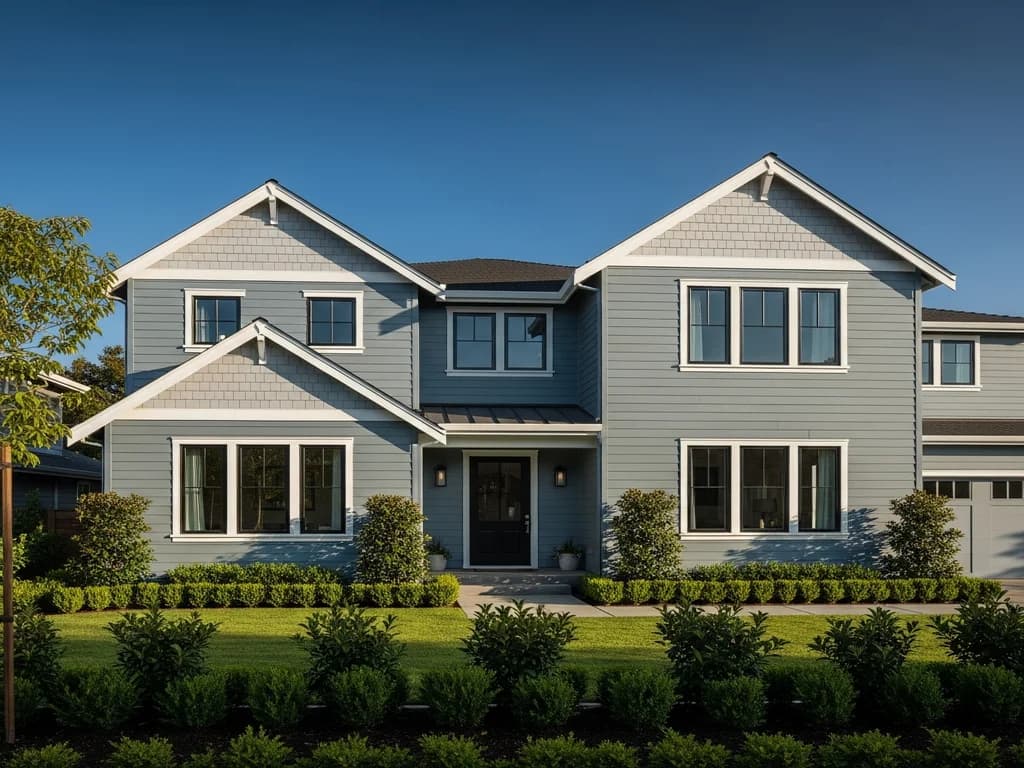
Product facts throughout this guide are attributed to James Hardie, the manufacturer. You can browse the complete James Hardie exterior siding catalog for the official specifications.
James Hardie engineers its siding differently for different climates through its HardieZone system. For Northern California, that split matters a great deal.
HZ10 — most of California
According to James Hardie, most of California is HZ10, engineered for heat, intense sun, and coastal moisture. That covers the Sacramento Valley, the lower foothills, the Bay Area, wine country, and the Central Coast we serve.
HZ5 — high Sierra & Tahoe
The high Sierra and the Tahoe/Truckee area fall in HZ5, engineered for freeze-thaw cycles, snow, and cold. Specifying the right zone product is one of the most important decisions on a mountain home.
We confirm your home's zone and specify the matching HZ product before ordering. Our warranty & HardieZone guide goes deeper on how the zones and the warranty interact.
James Hardie makes a full family of fiber cement products, from the everyday lap siding on most homes to premium architectural boards. Here is the overview; each line links to its official James Hardie page, and our complete products guide covers each in depth.
HardiePlank® lap siding
Classic horizontal lap — the most popular profile
The traditional horizontal clapboard look that fits nearly every Northern California home, from ranch to farmhouse to Craftsman. Offered in Select Cedarmill wood-grain and Smooth textures.
View on James Hardie →HardiePanel® vertical siding
Board-and-batten and modern flush
Large vertical panels used with Hardie Trim battens for a board-and-batten farmhouse look, or on their own for a clean modern facade. Available in Cedarmill, Smooth, Stucco, and Sierra 8 textures.
View on James Hardie →Hardie® Shingle siding
Shake & shingle accents
Fiber cement shake-and-shingle panels in straight-edge and staggered-edge styles — a cottage and Craftsman staple for gables, dormers, and accent walls without the maintenance of real cedar shakes.
View on James Hardie →Hardie® Artisan® siding
Premium thick boards, deep shadow lines
James Hardie's premium line: thicker boards with a true-to-wood profile and deep shadow lines that read as high-end architectural siding. A step up for custom and luxury homes.
View on James Hardie →Architectural Panel (Aspyre®)
Contemporary large-format panels
The Aspyre Collection Reveal panel system — large-format fiber cement panels with clean, defined reveals for contemporary and commercial-style facades.
View on James Hardie →Hardie® Trim, Soffit & HardieWrap®
The complete exterior system
Hardie Trim boards frame windows, doors, and corners; Hardie Soffit panels finish the eaves; and the HardieWrap weather barrier manages moisture behind the siding — so the whole wall assembly is one coordinated system.
View on James Hardie →| Product | Profile | Texture / style | Best for |
|---|---|---|---|
| HardiePlank® lap | Horizontal lap | Cedarmill, Smooth | The default — ranch, farmhouse, Craftsman |
| HardiePanel® vertical | Vertical panel | Cedarmill, Smooth, Stucco, Sierra 8 | Board-and-batten & modern flush walls |
| Hardie® Shingle | Shake / shingle | Straight & staggered edge | Gables, dormers, cottage accents |
| Hardie® Artisan® | Thick lap, deep shadow | True-to-wood | Premium & custom architecture |
| Architectural Panel (Aspyre®) | Large-format panel | Reveal system | Contemporary & commercial facades |
| Trim / Soffit / HardieWrap® | Trim, eaves, barrier | — | Completing the wall as one system |
James Hardie's ColorPlus® Technology is a factory-applied, baked-on finish — applied in a controlled setting rather than painted in the field — which, per James Hardie, resists fading and is backed by a 15-year finish warranty. The colors come in two curated palettes.
Statement Collection®
The core ColorPlus palette, with popular colors such as Iron Gray, Aged Pewter, Blu Note, and Deep Ocean. See the current range on James Hardie's Statement Collection page.
Dream Collection®
The expanded palette for homeowners who want more options beyond the core colors. Browse the full set on James Hardie's Dream Collection page.
On textures, James Hardie offers Select Cedarmill® (wood grain), Smooth, Beaded, Stucco, and Sierra 8 (on panel), so you can match a traditional wood look or a clean modern face. Rather than cite an exact color count that changes over time, we point you to the official palettes above and our ColorPlus colors guide and textures & styles guide.
James Hardie backs its siding, trim, and soffit with a transferable 30-year non-prorated limited warranty on the fiber cement substrate, plus a separate 15-year limited warranty on the ColorPlus factory finish, per James Hardie's warranty information. That warranty depends on the product being installed to James Hardie's published requirements — the clearances, flashing, fastening, and joint detailing — which is why correct installation matters as much as the material itself.
James Hardie fiber cement typically costs more up front than vinyl and sits in a similar-to-higher range than engineered wood, with the premium Artisan and Architectural panel lines costing more than standard HardiePlank. The installed price depends on your home's size and number of stories, how much old siding has to be removed, whether sheathing or trim needs repair, the product line and texture you choose, and access and prep on your specific site.
Because those variables move the number so much, we do not publish a per-square-foot price or quote a figure sight unseen. The cost ranges here are broad orientation, not a quote. The honest number for your home is the fixed-price, line-item proposal we prepare after measuring the walls and assessing the condition of what is behind the existing siding.
A note on cost honesty
We do not publish a per-square-foot James Hardie price. The number for your home depends on its size, the condition of the wall behind the old siding, the product line, and site access — so the honest figure is a fixed-price, line-item proposal after we assess your home. Compare materials in our fiber cement vs. vinyl vs. engineered wood guide.
A Hardie exterior lasts because of what happens behind and around the boards, not just the boards themselves. Here is the sequence we follow on a full re-side.
Confirm the right HardieZone product
We identify whether your home falls in HZ10 or HZ5 and specify the James Hardie product engineered for that zone before anything is ordered.
Remove old siding & inspect the wall
We strip the failing cladding and inspect the sheathing, flashing, and framing for hidden rot or damage — the part that a siding-over job hides and that determines how long the new wall lasts.
Install the weather barrier & flashing
The HardieWrap weather-resistive barrier, along with proper flashing at windows, doors, and the base of the wall, creates the drainage plane that keeps water out behind the siding.
Install siding to James Hardie specs
We fasten and detail the siding to James Hardie's published installation requirements — the clearances, fastening, and joint detailing that keep the warranty valid and the wall performing.
Trim, caulk & finish
Hardie Trim, soffit, corners, and color-matched caulk finish the exterior into a clean, sealed system, with touch-up on any factory-finished ColorPlus pieces.
One of the biggest reasons homeowners choose James Hardie is how little it asks of them afterward — but low-maintenance is not no-maintenance, and we'd rather set honest expectations. A Hardie exterior stays its best with a few simple habits:
- Rinse the siding gently once or twice a year to remove dust, pollen, and any mildew — a garden hose and soft brush, not a high-pressure washer aimed at the joints.
- Keep sprinklers and irrigation from spraying directly onto the siding, which drives premature staining and moisture at the base of the wall.
- Re-caulk joints, trim, and penetrations as the sealant ages so the wall stays watertight — sealant is a wear item on any exterior.
- Touch up nicks and cuts, and repaint far less often than wood — ColorPlus finishes resist fading, so many homeowners go well over a decade before a refresh.
- Keep vegetation trimmed back and clear debris from the base — good practice for siding longevity and, in fire country, for defensible space.
A large share of Northern California homes are stucco, and re-cladding stucco with James Hardie is one of the most common exterior projects we scope — often to get a fresh, updated look, to improve fire performance in the foothills and wine country, or to solve recurring cracking and moisture problems behind aging stucco.
It is a bigger job than a siding-to-siding swap, and we're upfront about that. The stucco and its lath are removed, the wall sheathing is inspected, any moisture damage is repaired, and a fresh weather-resistive barrier and flashing go on before the Hardie is installed — so you get a properly detailed, drained wall rather than new cladding hiding old problems. Where stucco is sound and the goal is purely aesthetic, we'll say so and talk through the trade-offs honestly. For how the numbers work, see our Northern California siding cost guide.
What matters about James Hardie changes across the region we serve. In the Placer and El Dorado foothills — around Auburn and the WUI communities near it — non-combustible siding is often a Chapter 7A requirement and a core part of wildfire home hardening. In Truckee and the Tahoe basin, homes fall in the HZ5 zone, so freeze-thaw-rated product and snow-country detailing matter. In the valley around Roseville, heat and UV stability drive the choice; and in wine country like Napa, fire history has made ignition-resistant siding a priority for many rebuilds and renovations.
Wherever your home is, we confirm its HardieZone and any Chapter 7A requirement before scoping work, specify the right product, and install it to James Hardie's standards — and we describe fiber cement honestly as fire-resistant and non-combustible, never fireproof.