Across Northern California, wildfire is a routine part of life, and the way homes ignite is often not a wall of flame but a shower of wind-blown embers that land against the house hours before or after the front passes. Siding is one of the surfaces those embers reach, so choosing an ignition-resistant exterior — and detailing it correctly — is one of the levers a homeowner actually controls to reduce the risk of a home catching.
This guide covers how siding contributes to wildfire resistance in California: what the fire-hazard severity zones and wildland-urban interface (WUI) mean, what CBC Chapter 7A requires of ignition-resistant materials, how fiber cement and other claddings perform, and — just as important — why siding is only one part of hardening a home. We will be plain about this throughout: no siding makes a house fireproof or guarantees it will not burn. The honest goal is to reduce ignition risk and meet code.
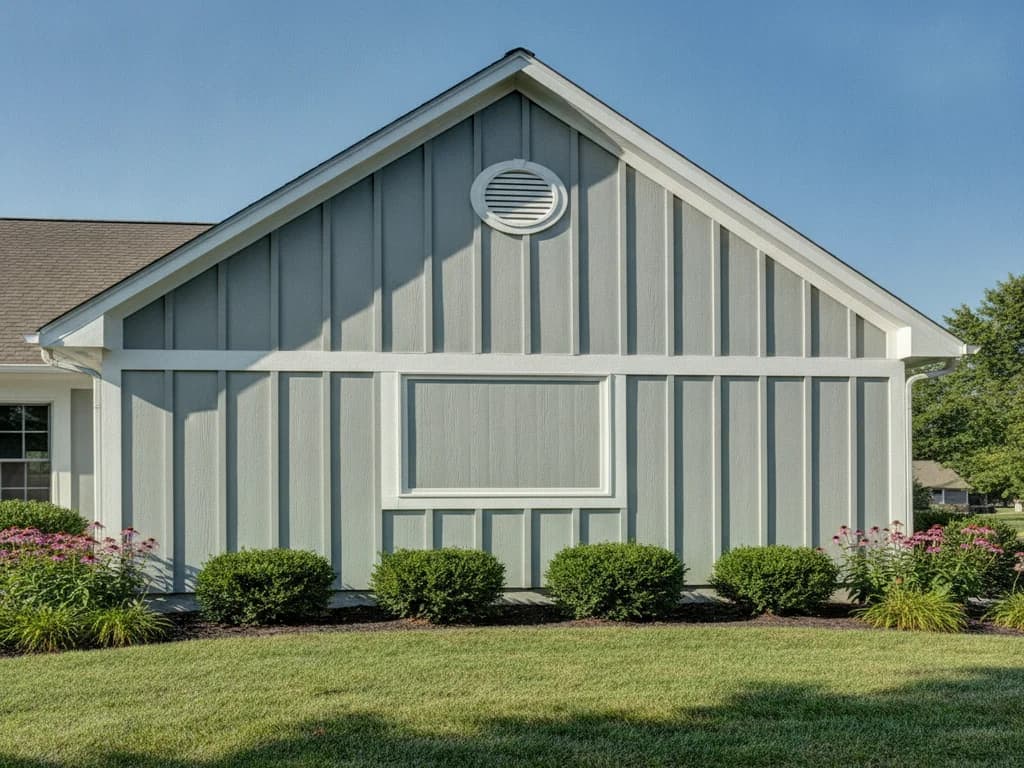
California maps areas into moderate, high, and very high fire-hazard severity zones based on fuel, terrain, and fire history. Much of the Placer, El Dorado, and Nevada County foothills — Auburn, Grass Valley, Nevada City, and the areas around Folsom Lake and toward Tahoe — fall into higher zones. Your zone drives which code requirements apply to a re-side or new construction.
The WUI is where homes meet or intermingle with wildland vegetation. Building in a designated WUI fire area triggers the California Building Code's Chapter 7A material and assembly requirements — including ignition-resistant exterior walls — which is where siding selection becomes a code issue, not just a preference.
Studies of California wildfires repeatedly find that most homes ignite from embers, not direct flame contact. Embers pile against siding, decks, vents, and debris. That is why ignition-resistant cladding, ember-resistant vents, and clearing combustibles near the wall all matter together.
Chapter 7A of the California Building Code sets the material and assembly requirements for homes in the wildland-urban interface, and exterior walls are one of the covered elements. In practice, that means an ignition-resistant or non-combustible exterior — most commonly fiber cement, stucco, or masonry — installed and detailed so embers and radiant heat cannot easily ignite the wall. The California Office of the State Fire Marshal maintains a Building Materials Listing of products tested and approved for WUI use, and local building departments confirm compliance at permit. We select and install cladding that meets the requirements for your specific fire-hazard zone.
Not all cladding performs the same against fire. Here is how the common materials compare for wildfire resistance in Northern California — with the honest caveat that installation and the rest of the home matter just as much.
Fiber cement (e.g., James Hardie)
Non-combustible, strong WUI fit
Fiber cement is non-combustible and is widely used to meet CBC Chapter 7A ignition-resistant exterior-wall requirements. It resists ignition from embers and radiant heat far better than wood-based or vinyl cladding, which is why it is a common choice for homes in high and very high fire-hazard zones. It is not a guarantee — but it removes the siding itself as easy fuel.
Stucco and masonry
Non-combustible assemblies
Cement plaster (stucco) and masonry are non-combustible wall finishes long used in California and accepted under Chapter 7A when detailed correctly. They are a proven approach where a continuous non-combustible surface is the goal.
Engineered wood and natural wood
Combustible — limited in high zones
Engineered wood and natural wood claddings are combustible. Some assemblies can achieve ignition-resistant ratings through testing and detailing, but as a category they are a poorer fit for the highest fire-hazard zones than non-combustible options. Where they are used, correct clearances and maintenance matter even more.
Vinyl
Combustible — poor high-zone fit
Vinyl siding is combustible and can soften, melt, or ignite under radiant heat and ember exposure, making it a poor choice for high fire-hazard WUI areas. It can be appropriate on lower-risk sites, but it is not the material to reach for when ignition resistance is the priority.
No home is fireproof
We will always tell you the truth about this: no siding, and no house, is fireproof. Ignition-resistant cladding reduces risk and meets code — it does not guarantee a home survives a wildfire. Beware anyone who promises otherwise.
It is worth stating plainly: there is no fireproof house and no siding that will keep a home from burning under every condition. Wildfire behavior is extreme and unpredictable, and any contractor who promises a home will not burn is not being honest with you.
What ignition-resistant siding does is real and valuable: it reduces the chance that embers or radiant heat ignite the exterior wall, and it helps a home meet the code required for its fire-hazard zone. Paired with the rest of a hardening approach — ember-resistant vents, a Class A roof, clean gutters, defensible space, and no combustibles stacked against the wall — it meaningfully lowers a home's ignition risk. That system, not any single product, is what improves the odds.
A wildfire-resistant exterior comes together in a clear order. Here is how we approach it with Northern California homeowners in fire-prone areas.
Confirm your fire-hazard zone and WUI status
Check whether your address falls in a moderate, high, or very high fire-hazard severity zone and a designated WUI fire area. This determines which CBC Chapter 7A requirements apply to your re-side.
Choose an ignition-resistant exterior wall
For higher-hazard zones, favor non-combustible cladding such as fiber cement, stucco, or masonry that meets Chapter 7A. We match the assembly to your zone and detail it correctly.
Detail the wall to keep water and embers out
Behind and around the siding, a proper weather-resistive barrier, flashing, and closed gaps do double duty — keeping water out of the wall and denying embers a path behind the cladding.
Address vents, eaves, and the near-home zone
Ember-resistant vents, boxed or protected eaves, and clearing combustibles within the first five feet of the wall are the companions to ignition-resistant siding. Siding alone is not the finish line.
Maintain defensible space around the home
Cal Fire's defensible-space guidance — managing vegetation and fuels around the structure — is a legal requirement in many areas and the outer layer that gives the hardened exterior a fighting chance.