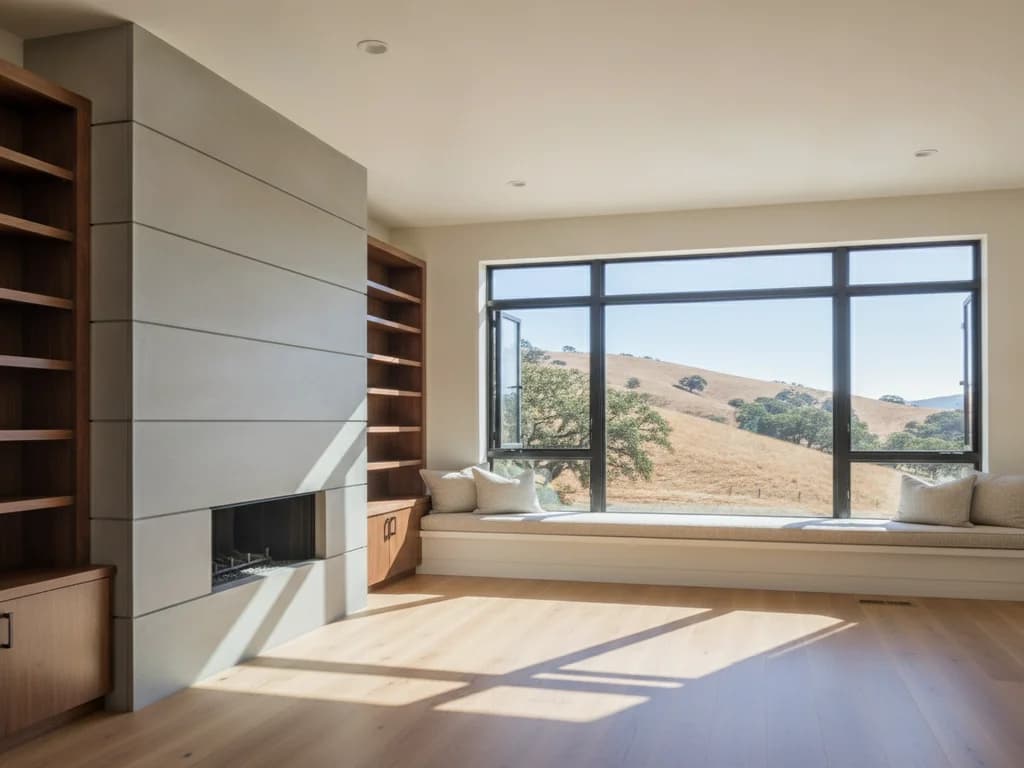
Window Replacement in Northern California
Northern California asks a lot of a window — long, hot inland summers, strong sun, and, in fire-hazard areas, exposure to radiant heat and embers. Old single-pane and worn double-pane windows leak energy and comfort. Our team installs energy-efficient, Title 24-compliant vinyl and fiberglass replacement windows with Low-E glass and proper flashing, and can specify dual-pane tempered glass where fire hardening calls for it.
- Double-hung, casement, slider, and picture windows
- Dual- and triple-pane insulated glass
- Low-E coatings and argon gas fill
- Title 24-compliant U-factor and SHGC ratings
- Vinyl and fiberglass frame options
- Dual-pane tempered glass for fire-hazard zones
- Bay and bow window installation
- Custom sizes for older, non-standard openings
- Proper flashing and air-sealing at every opening
- ENERGY STAR qualified products
Typical Timeline
Typically 1 – 4 days
Window Assessment
We check each window for drafts, condensation between panes, and operation, measure every opening, and discuss frame and glass options — including Title 24 ratings and any fire-hazard requirements.
Product Selection
We recommend windows based on your home's style, comfort goals, and budget, and confirm the glass package meets Title 24 for your climate zone. You choose frame material, glass, grid pattern, and hardware.
Installation & Sealing
Old windows come out, openings are inspected and prepped, and new units are set with proper shimming, insulation, and flashing. Older homes sometimes have out-of-square or non-standard openings, which we address during install.
Trim & Warranty
Interior and exterior trim is finished, each window is tested for smooth operation and a tight seal, and you receive the manufacturer warranty documentation.

Plan Your Remodel With Confidence.
Tell us about your kitchen, bathroom, siding, or deck project and we'll help you plan the scope, materials, and budget that fit your home — free, no obligation, in a single conversation. Then book a consultation with our licensed Northern California crew.
Free consultation · No obligation · Licensed & insured
Will new windows really lower my energy bills?
In most cases, yes — especially replacing single-pane or failed double-pane windows. Low-E, gas-filled insulated glass reduces the heat you gain through long, sunny summers, which is the biggest driver of cooling costs here. The savings depend on what you're replacing and your home's overall envelope.
Do replacement windows have to meet Title 24?
Yes. California's Title 24 energy code sets maximum U-factor and solar heat gain values for replacement windows, and the values differ by climate zone across our region. We specify products that meet Title 24 for your zone and provide the documentation for permitting.
What kind of windows do I need in a fire-hazard area?
Homes in Wildland-Urban Interface and fire-hazard severity zones generally require dual-pane windows with at least one tempered pane under California's Chapter 7A, because single-pane glass can fail quickly under radiant heat and let fire inside. We specify compliant glazing where your home falls in one of these zones.
What's the foggy film between my window panes?
That fog means the seal on an insulated glass unit has failed and moisture has gotten between the panes — the window has lost much of its insulating value. It's a clear sign that unit is ready for replacement.
How long does a whole-house window replacement take?
Most whole-home projects are completed in a few days, depending on the number of windows and any opening repairs. Individual windows install quickly once the units are on site.
We provide window replacement to homeowners throughout the Sacramento region, the Placer and El Dorado foothills, and the Tahoe–Truckee area. Each community has its own page with local permitting and housing detail.
Plan your window replacement project with our in-depth guides.
Talk to a real project manager
Have Questions? Call Now for a Free In-Home Consultation.
Mon–Fri 7 AM–6 PM · Licensed & insured · No obligation

George S · Your Project Manager
Ready to Start Your Remodeling Project?
Get a free, no-obligation estimate from Northern California's remodeling and exterior specialists. Licensed, insured, and ready to build.
Few parts of a Northern California home work harder than the windows. They face hot, sun-drenched valley and foothill afternoons, cool coastal fog and salt air, and cold Sierra nights at Tahoe elevation. Old single-pane and worn double-pane units leak energy at both ends of that range and let solar heat pour in through the glass. Replacing them is one of the most reliable comfort-and-efficiency upgrades a home here can make.
Window replacement is also one piece of a larger exterior. If your siding, trim, or doors are aging on the same timeline, it's often worth coordinating the work — see our exterior remodeling services for the full picture. Windows pair especially well with new entry doors and patio doors for a matched, weather-tight envelope — and in fire-hazard areas, tempered glazing is a core part of wildfire home hardening. For budgeting context on a coordinated exterior project, our Sacramento siding cost guide walks through how exterior work is priced.
The style of window matters as much as the frame or glass — each operates differently, ventilates differently, and suits different rooms and elevations of a Northern California home. These are the styles we install most often.
Double-Hung
A common replacement window across the region. Both sashes slide vertically and tilt in for cleaning, which is a real advantage on second stories. Double-hung windows suit everything from foothill Craftsman homes to two-story tract houses and are available in every frame material and glass package.
Casement
Hinged on one side and cranked outward, casements press tight against the frame when closed for one of the best air seals of any operable window — a genuine plus for cold Sierra nights and windy exposures. They open fully top to bottom, making them a strong choice over kitchen sinks and in baths where airflow matters.
Slider
Sliders glide horizontally on a track and work well in wide openings and above counters. They're a common choice for single-story homes and are often sized to meet bedroom egress requirements where an opening needs to serve as an exit.
Picture & Specialty
Fixed picture windows maximize light and view with the best energy performance and zero air leakage, since there are no moving parts — ideal for framing a foothill or coastal view. Bay and bow assemblies add dimension and interior shelf space and suit older neighborhoods where curb appeal is part of the home's character.
The frame determines how the window performs in our sun and temperature swings, how much upkeep it needs, and how long it lasts. Here is an honest, qualitative comparison of the materials we install most. Pricing depends on your home and the package you choose, so we provide a written estimate after measuring rather than quoting a number sight unseen.
| Frame | Relative Cost | Efficiency | Upkeep | Best For |
|---|---|---|---|---|
| Vinyl | Value | Good | None | Most Northern California homes and rentals |
| Fiberglass | Premium | Excellent | None | Longevity, large openings, dark colors |
| Wood | Premium | Good | Periodic paint/stain | Historic and craftsman homes wanting a wood interior |
| Wood-Clad | Highest | Excellent | Interior only | Wood look inside, no-maintenance exterior |
For most homeowners in the region, vinyl offers the best balance of cost, efficiency, and longevity. Fiberglass and wood-clad are worth the premium when you want the longest possible lifespan or a specific high-end look. We help you match the material to your home, budget, and goals during the consultation.
The glass package — not the frame — is the single biggest driver of a window's energy performance. A few features do most of the work in our climate.
It adds up: the EPA/DOE ENERGY STAR program reports that replacing single-pane windows with certified units lowers a household's energy bills by up to about 13% on average. California's own Title 24 energy code sets the U-factor and SHGC requirements by climate zone, and across most of Northern California limiting summer solar heat gain is a priority — exactly the combination we spec.
- Low-E coatings: microscopically thin metallic layers that reflect interior heat back inside during cold nights and bounce solar heat away during hot afternoons, while cutting the UV that fades floors and furniture.
- Argon gas fill: an inert gas between the panes that insulates noticeably better than plain air, improving the U-factor at modest added cost.
- Tempered & dual-pane glazing: in Wildland-Urban Interface fire zones, dual-pane units with a tempered pane resist radiant-heat breakage, a Chapter 7A requirement we build into the package.
- Title 24 compliance: certified units meet California's requirements for your climate zone — we specify compliant glass and provide the NFRC documentation you need for any available rebates.
There are two ways to replace a window, and choosing the right one for each opening protects both performance and your budget. During our on-site assessment we inspect every opening individually — many older homes need a mix of both approaches.
Insert (Pocket) Replacement
A new window is set inside the existing, sound frame. It's faster, less disruptive to interior and exterior trim, and appropriate when the original frame is square, level, and free of rot. This is the right call on most homes where the frames are in good shape.
Full-Frame (New Construction) Replacement
Everything comes out down to the rough opening, and a new window with its own frame and flashing is installed and sealed to the wall's weather barrier. It's necessary when the existing frame is rotted or water-damaged — common on older wood-frame windows in historic and coastal neighborhoods — or when you're changing the opening size. We document the condition of each opening and explain the recommendation before you commit to a scope.
Window replacement is most efficient when combined with siding, trim, or exterior painting projects.
The following government agencies, industry organizations, and official resources provide additional information relevant to your remodeling project.
We provide window replacement to homeowners across the Sacramento region, the Placer and El Dorado foothills, and the Tahoe–Truckee area. Each community has its own dedicated page with local permitting, climate, and project detail — and each regional hub covers the surrounding areas we also serve.
Ready to Start Your Remodeling Project?
Get a free, no-obligation estimate from Northern California's remodeling and exterior specialists. Licensed, insured, and ready to build.