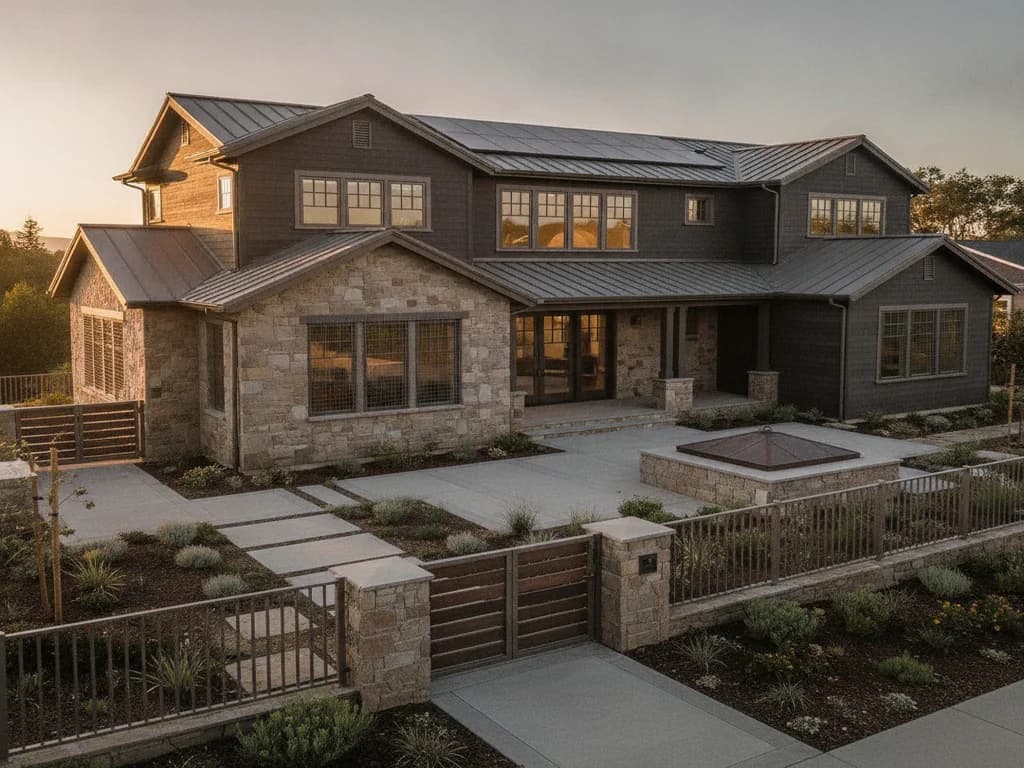
Wildfire Home Hardening in Northern California
For homes in the foothills, the Sierra, and Wine Country, wildfire is a real and recurring threat — and most homes ignite from wind-blown embers, not a wall of flame. Home hardening focuses on the exterior details that keep embers out: non-combustible siding, ember-resistant vents, enclosed eaves, dual-pane tempered windows, and non-combustible decking. Our team performs this work to California's Chapter 7A standards for fire-hazard severity zones. We're clear about what this does and doesn't do — no home can be made fireproof, but hardening measurably reduces the ways a home ignites and complements Cal Fire's defensible space guidance.
For homes in the Sierra foothills, the Tahoe/Truckee basin, and Wine Country, wildfire is a real and recurring threat. Home hardening is the exterior work that reduces the ways a home ignites — and we're direct about what it can and can't do: no home can be made fireproof. What hardening does is close off the vulnerabilities embers exploit. Most of that work overlaps with our non-combustible siding, tempered windows, and non-combustible decking, so it's often folded into a broader exterior remodeling project.
- Non-combustible fiber cement siding (Chapter 7A-appropriate)
- Ember-resistant, screened vents at soffits, gables, and foundation
- Enclosed, boxed eaves to keep embers off the roofline
- Dual-pane tempered windows for radiant-heat resistance
- Non-combustible or ignition-resistant deck surfaces and framing
- Metal flashing, drip edge, and non-combustible trim details
- Sealing of gaps and openings where embers can enter
- Exterior work that supports Zone 0 (0–5 ft) ember-resistant zone
- Fire-smart material selection matched to your fire-hazard zone
- Coordination with siding, window, and deck projects
Most homes lost in a wildfire aren't consumed by an advancing wall of flame — they ignite from wind-blown embers that arrive first and find a weak point. Hardening targets those weak points in priority order.
Vents
Unscreened attic, gable, and foundation vents let embers straight into the structure. Ember-resistant vents or fine metal screening close the most common ignition path.
Zone 0 — The First 5 Feet
Combustible siding, fences, mulch, or debris right against the walls give embers a place to catch. Keeping the 0–5 ft zone non-combustible is consistently high-impact.
Eaves & Soffits
Open eaves trap rising heat and embers along the roofline. Enclosing and boxing the eaves removes that pocket and protects the connection to the attic.
Siding & Walls
Non-combustible fiber cement resists ignition far better than wood or vinyl siding, and it holds up to the radiant heat a nearby fire throws off.
Windows
Single-pane glass can break from radiant heat and open the interior to embers. Dual-pane tempered glass resists that failure far longer.
Decks & Attachments
A combustible deck is essentially a fuel bed attached to the house. Non-combustible or ignition-resistant decking and framing remove that risk.
Get Your Free Home Hardening Assessment
Free in-home consultation across Northern California's fire-hazard zones — a prioritized, written plan matched to your Chapter 7A requirements.
Hardening Assessment
We walk the exterior looking at the most common ember-entry points — vents, eaves, siding, windows, decks, and the first five feet around the home — and identify which measures matter most for your home and its fire-hazard zone.
Priorities & Plan
We build a plan that targets the highest-impact vulnerabilities first, aligned with California's Chapter 7A requirements and Cal Fire home-hardening guidance, and scoped to your budget so you can phase the work if needed.
Material Selection
We specify non-combustible and ignition-resistant materials — fiber cement siding, ember-resistant vents, tempered glazing, and non-combustible decking — appropriate to your zone.
Construction & Sealing
We install the hardened assemblies and seal the gaps and openings where embers gather, coordinating any inspections your jurisdiction requires.
Walkthrough & Guidance
We review the completed work with you and point out the maintenance and defensible-space habits — clearing debris from the Zone 0 area, keeping vents clear — that keep the hardening effective.
What Chapter 7A requires, how defensible space and hardening fit together, and an honest account of what this work does and doesn't do.
What Hardening Does — and What It Doesn't
We want to be clear up front: hardening a home does not make it fireproof, and no honest contractor should tell you it will. Under an extreme fire event, any home can be lost. What hardening does is measurably reduce the number of ways a home ignites — which, in the more common ember-driven scenario, is what determines whether a home survives.
Think of it as removing vulnerabilities one by one: screen the vents so embers can't get in, swap combustible siding for fiber cement, enclose the eaves, specify tempered glass, and clear the first five feet around the house. Each measure closes a documented ignition path. Together, and paired with Cal Fire's defensible-space guidance, they meaningfully improve the odds — without any promise of a certain outcome.
Chapter 7A & Ignition-Resistant Materials
Chapter 7A of the California Building Code sets the material and construction standards for homes in Wildland-Urban Interface (WUI) areas and designated Fire Hazard Severity Zones. It governs siding, roofing, vents, eaves, exterior windows, and decking, and it's enforced through the California Office of the State Fire Marshal's Building Materials Listing.
In practice, that means specifying non-combustible or ignition-resistant assemblies: fiber cement siding rather than wood or vinyl, ember-resistant vents rather than plain louvers, tempered dual-pane glazing, and non-combustible deck materials. In the higher Sierra and Tahoe, James Hardie's HardieZone system points to the HZ5 product for freeze-thaw and snow, while most of the foothills and valley fall in HZ10 — we match the boards and details to your zone and to what your jurisdiction requires for new work.
Hardening + Defensible Space Work Together
Hardening the home and creating defensible space are two halves of the same strategy. Defensible space, guided by Cal Fire's Ready for Wildfire program, manages the vegetation and combustible material around the home in zones out to 100 feet. Home hardening is the home's own construction — its siding, vents, eaves, windows, and deck.
Our work is the hardening side of that equation. Cal Fire's Zone 0 — the ember-resistant five feet immediately around the house — is where the two overlap most: we keep exterior materials in that zone non-combustible, and we'll point out the vegetation and storage habits that keep it clear. One without the other leaves a gap.
Will home hardening make my home fireproof?
No, and you should be cautious of anyone who claims it will. No home can be made fireproof. What hardening does is reduce the ways a home ignites — most homes are lost to wind-blown embers that find vents, gaps, combustible siding, or debris near the walls. Closing those vulnerabilities measurably lowers the risk. It works best combined with defensible space around the home.
What is Chapter 7A and does it apply to me?
Chapter 7A is the part of the California Building Code that governs materials and construction for homes in Wildland-Urban Interface and designated fire-hazard severity zones. It covers siding, roofing, vents, eaves, windows, and decks. Whether it applies depends on whether your property is in one of those zones — common in the foothills, the Sierra, and parts of Wine Country. We confirm your zone during the assessment.
What's the single most important thing to harden?
It varies by home, but vents and the first five feet around the house (often called Zone 0) are consistently high-impact. Unscreened vents let embers straight into the attic or crawlspace, and combustible material right against the walls gives embers a place to ignite. We prioritize based on what we find on your specific home.
Is this the same as defensible space clearing?
They work together but they're different. Defensible space, guided by Cal Fire, is about managing vegetation and combustible material around the home. Home hardening is about the home's own construction — its siding, vents, eaves, windows, and deck. Our work focuses on the hardening side, and we'll point out defensible-space steps that complement it.
Can hardening be done alongside other exterior work?
Yes, and it's often the most efficient approach. A re-side is the natural time to move to non-combustible siding; new windows are the time to specify tempered dual-pane glass; a deck rebuild is the time to use non-combustible materials. We coordinate hardening with those projects so you're not paying to open the same assemblies twice.
How does hardening relate to a fire-hazard severity zone map?
California maps Fire Hazard Severity Zones and Wildland-Urban Interface (WUI) areas, and where your property falls determines which Chapter 7A requirements apply to new work. Much of the Sierra foothills, the Tahoe/Truckee area, and parts of Wine Country sit in moderate-to-very-high zones. We confirm your zone during the assessment and match the materials and details to what your jurisdiction requires — we don't guess at it.
Why are vents and the first five feet such a focus?
Research from the Insurance Institute for Business & Home Safety and Cal Fire consistently finds that wind-blown embers, not a direct wall of flame, ignite most homes. Embers travel ahead of a fire and collect at unscreened vents, in gaps, and against combustible material right next to the house. Closing vents with ember-resistant screening and keeping the Zone 0 area (0–5 feet) free of anything that can catch is among the highest-impact work you can do.
Can you harden a home in Tahoe or Truckee where it also has to handle snow?
Yes, and the two goals work together more than they conflict. Non-combustible fiber cement siding, metal flashing, tempered glazing, and enclosed eaves all perform well through heavy-snow, freeze-thaw Sierra winters. In the higher Sierra and Tahoe, James Hardie's HardieZone system points to the HZ5 product, so we specify the zone-appropriate boards and details for both the fire and the winter your home sees.
We provide wildfire home hardening to homeowners across the Sacramento region, the Placer and El Dorado foothills, and the Tahoe–Truckee area. Each community has its own dedicated page with local permitting, climate, and project detail — and each regional hub covers the surrounding areas we also serve.
- Wildfire Home Hardening in Sacramento
- Wildfire Home Hardening in Folsom
- Wildfire Home Hardening in El Dorado Hills
- Wildfire Home Hardening in Elk Grove
- Wildfire Home Hardening in Citrus Heights
- Wildfire Home Hardening in Fair Oaks
- Wildfire Home Hardening in Carmichael
- Wildfire Home Hardening in Davis
- Wildfire Home Hardening in Woodland
The following government agencies, industry organizations, and official resources provide additional information relevant to your remodeling project.
Ready to Start Your Remodeling Project?
Get a free, no-obligation estimate from Northern California's remodeling and exterior specialists. Licensed, insured, and ready to build.