A bathroom is a small room that behaves like a big one. Square foot for square foot, it is often the most expensive space in the house to remodel, because a bathroom packs plumbing, waterproofing, ventilation, tile, electrical, and finish work into a tight footprint where nothing can be done sloppily. Water is unforgiving. A cosmetic mistake in a living room is a repaint; a waterproofing mistake in a shower is a tear-out.
This guide explains what genuinely drives bathroom remodeling cost across Northern California — from powder-room refreshes in newer Roseville, Rocklin, and Folsom homes to full primary-bath reconfigurations in the older neighborhoods of Sacramento, Auburn, Grass Valley, and the foothills. We will not invent a single dollar figure for your home, because an honest bathroom number depends on your actual layout, plumbing, and the conditions behind the tile. What we will do is show you the broad ranges the market falls into, where the money goes, and how to plan a budget you can trust.
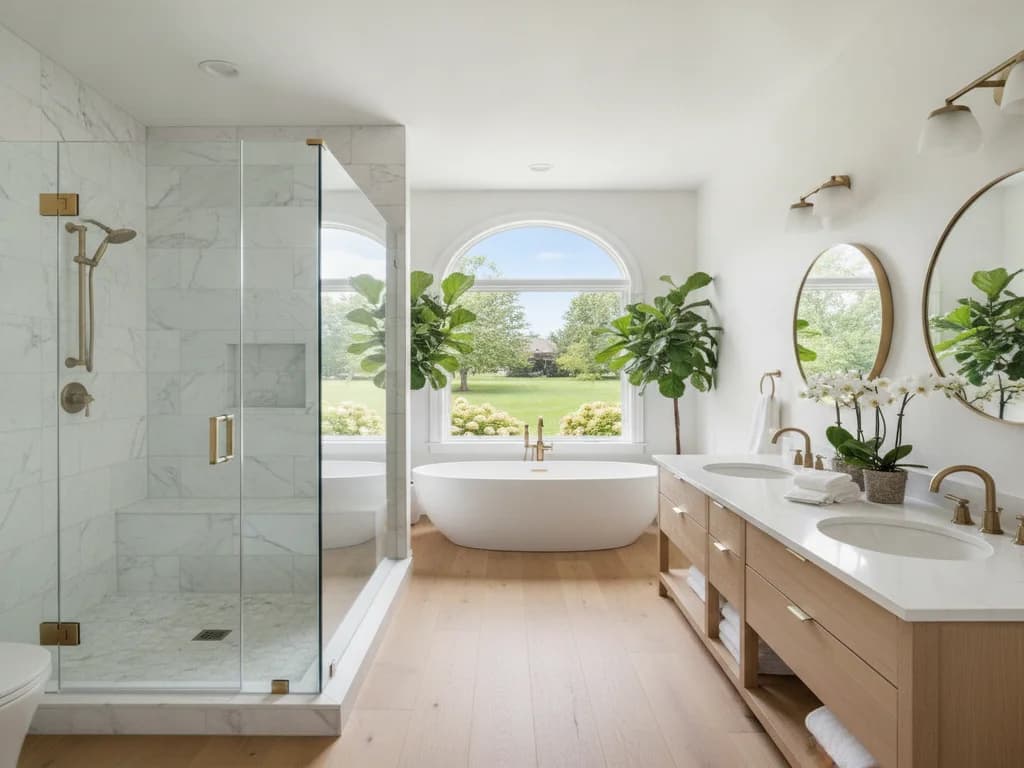
Bathroom projects across Northern California sort into three tiers. Finding yours is the fastest route to a realistic budget, because the jump between tiers is driven by plumbing and structure, not by which tile you fall in love with.
Cosmetic Refresh
Same fixtures and footprint, updated surfaces and finishes.
- New vanity, mirror, and light fixture in existing locations
- New toilet and faucet without moving supply or drain
- New flooring and repaint
- Reglazed or replaced tub, or a new tub surround
- Updated hardware and accessories
- No plumbing relocation, so often no permit
Mid-Range Remodel
New tile shower or tub, new fixtures, updated plumbing and electrical.
- New tiled shower or tub with proper waterproofing
- New vanity, counter, toilet, and fixtures
- New exhaust fan and code-compliant, Title 24 electrical
- Full tile floor and updated lighting plan
- Plumbing brought up to current code
- Minor layout tweaks within the existing footprint
Full Gut & Reconfiguration
Down to the studs, fixtures relocated, layout redesigned, sometimes walls moved.
- Curbless or custom tiled shower, freestanding tub
- Relocating toilet, shower, and vanity to a new layout
- Moving or removing walls; borrowing space from a closet or hall
- Full plumbing and electrical re-run to the new plan
- Heated floors, niche and bench details, frameless glass
- Structural, seismic, or subfloor work as conditions require
In our market, a full gut that relocates fixtures typically costs several times what a cosmetic refresh of the same bathroom costs. As with kitchens, the biggest jump is not the tile you pick — it is whether the plumbing and walls move, and how much waterproofing and structural work the new plan demands.
To set expectations honestly with a broad range — not a quote — bathroom remodels in the Sacramento region and across Northern California commonly land somewhere around $10,000–$25,000 for a cosmetic refresh, roughly $25,000–$55,000 for a mid-range remodel with a new tiled shower and fixtures, and $55,000 to well over $100,000 for a full gut and reconfiguration or an upscale primary bath. Bay Area, Wine Country, and Tahoe-Truckee projects tend to sit at the higher end of these ranges. These are ballpark figures that vary widely by scope, finishes, and the conditions behind your walls — the only number that means anything for your home is a fixed-price proposal after we see it.
Every bathroom budget is a mix of the same elements. Understanding their relative weight tells you where to invest and where you can reasonably economize.
A properly built tiled shower is the heart of most bathroom budgets. Done right, it involves a waterproof membrane or backer system, a correctly sloped pan, and careful detailing at niches, benches, and curbs. This is the one area where cutting cost invites failure, so it is where quality contractors will not compromise.
Relocating the toilet, shower drain, or vanity means re-running supply and drain lines — and drains need proper slope, which sometimes means opening the floor or ceiling below. This is the single factor most likely to push a mid-range project into full-gut territory.
Tile is labor-intensive, and the cost swings with size, pattern, and material. Large-format tile, intricate mosaics, and natural stone all raise both material and labor. A simple subway-tile wall and a detailed floor-to-ceiling stone shower are very different line items.
Stock versus custom vanities, the counter material, and the grade of faucets, toilet, and shower valves all move the number. Quality valves and trim are worth prioritizing because they are the parts you touch every day and the parts buried in the wall — and in much of the region's hard water, better valves and finishes hold up longer.
A modern bathroom needs a properly sized exhaust fan vented to the exterior, GFCI protection, and adequate, Title 24-compliant lighting circuits. In older homes this often means new wiring and a fan where none existed — essential for controlling the moisture that damages finishes over time.
Bathrooms are the room most likely to hide the wear of an older home, and Northern California has no shortage of older homes. The conditions below turn up regularly during demolition in the region's pre-war and mid-century houses — and each one is far cheaper to address while the wall is already open than to discover the hard way later.
Lead paint in pre-1978 homes
Northern California's older housing stock — the craftsman bungalows of East Sacramento and Midtown, the mid-century ranches of Arden and Carmichael, and the historic cottages of Auburn, Grass Valley, and Nevada City — means homes built before 1978 are likely to contain lead-based paint. Federal EPA Renovation, Repair and Painting rules require lead-safe practices when disturbing painted surfaces, which shapes how demolition is handled and adds cost on older homes.
Cast-iron and galvanized plumbing
Older Sacramento and foothill bathrooms frequently sit on cast-iron drains and galvanized supply lines. Once a wall or floor is open, corroded runs are often best replaced — a smart add that protects your new finishes from a leak behind fresh tile.
Hidden water damage and rot
Bathrooms in any older home are the most likely room to hide past leaks. Demolition regularly reveals soft subfloor, rotted framing around tubs and toilets, or mold behind old surrounds. It is unwelcome, but it is far cheaper to fix while the wall is already open.
No existing ventilation
Many pre-1970 bathrooms in the region were built with only a window for ventilation. Adding a properly vented exhaust fan — running ductwork to the exterior, not just into the attic — is a common and worthwhile addition that protects the whole remodel from moisture and meets current Title 24 ventilation expectations.
Plaster walls and seismic realities
Plaster-and-lath walls and tight, original layouts are common in the region's pre-war homes. Reworking them for a modern shower, a larger vanity, or accessibility can mean more demolition and framing than a newer home would require — and in California, opening up walls is often the moment to address dated framing and bring the work up to current seismic and building code.
A cosmetic refresh with no plumbing or electrical change often needs no permit. Once you relocate plumbing, add or move circuits, install a vented fan, or change the layout, permits and inspections apply — and the authority depends on where you live. In the Sacramento region that is the City or County of Sacramento, or a Placer or El Dorado city such as Roseville, Rocklin, Folsom, or Auburn, each running its own building department; on the Peninsula and Central Coast, jurisdictions such as the City of Santa Cruz and the County of Monterey handle it. All work follows the California Building Standards Code and Title 24. We pull permits and schedule inspections within our scope, so compliance is part of the project rather than your homework.
A realistic bathroom budget comes from a clear process, not a lucky guess. Here is the approach we walk Northern California homeowners through before demolition begins.
Pick your tier and protect the shower
Decide whether you are doing a cosmetic refresh, a mid-range remodel, or a full reconfiguration. Whatever the tier, do not cut corners on shower waterproofing — it is the part that fails expensively when done cheaply.
Decide early whether fixtures move
Moving the toilet, shower, or vanity is the biggest budget lever in a bathroom. If the existing layout works, keeping fixtures in place saves substantially. If the layout fights you, fixing it now is usually worth it.
Set a contingency for water and age
On any older Northern California home, plan a contingency for what demolition uncovers — rot, corroded plumbing, or missing ventilation. Bathrooms hide more surprises than any other room, so this reserve is not optional.
Select tile, fixtures, and glass before demolition
Tile choices, valves, vanities, and shower glass drive both cost and schedule. Lock them in before demolition so nothing stalls once walls are open and trades are on site.
Get a fixed-price, line-item proposal
Insist on a written scope with a fixed price broken out by line item. That is how we quote every Northern California bathroom — one clear number tied to your actual space, with waterproofing and ventilation specified, not glossed over.
For a broad frame of reference, national industry surveys such as Remodeling magazine's annual Cost vs. Value report track typical bathroom ranges and resale return by region. Treat them as a sanity check, not a quote — the only number that matters for your home is the fixed-price proposal we prepare after seeing it.
In bathrooms more than any other room, the lowest bid often wins by cutting the parts you cannot see. Compare on scope and method, not just the total.
- Ask exactly how the shower will be waterproofed. A vague answer here is the biggest red flag in bathroom bidding.
- Confirm every bid includes the same fixtures moving — or not moving. Relocated plumbing hidden out of a bid is a costly surprise later.
- Check that a properly vented exhaust fan and GFCI electrical are included, especially in older homes that lack them.
- Compare allowances for tile, vanity, and fixtures so a low bid is not just a low material assumption.
- Verify permits and inspections are included, and that CSLB licensing, insurance, and a written workmanship warranty are in writing.
- Ask how demolition surprises — rot, old plumbing — are priced before you sign, not after they are discovered.
Many homeowners finance a bathroom rather than paying all at once, and the right structure depends on the size of the project. On timing, bathrooms are interior work that can proceed year-round — through the hot, dry Valley summers and the wet foothill and Tahoe winters — and the quieter late-fall-through-winter window often brings more scheduling flexibility than the spring rush. The best first step is a fixed-price proposal, so any financing conversation starts from a real number for your home.