Siding is the single largest exposed surface on your house, so a re-side is a whole-envelope project, not a cosmetic one. Across the Sacramento region, siding also does a hard job: it faces long, hot summers with intense UV, wide temperature swings, wet winters and driving rain, and — across much of the foothills — genuine wildfire exposure. The right material and a correct installation are what stand between the elements and your walls.
This guide explains what genuinely drives siding cost across the Sacramento region — from older wood-sided homes in midtown Sacramento, Auburn, and Grass Valley to newer subdivisions in Roseville, Rocklin, Folsom, and El Dorado Hills. We will not quote a dollar figure for your home, because an honest siding number depends on your house's size, height, detailing, and what the old siding is hiding. What we will do is help you choose a material with clear eyes and plan a budget that holds up.
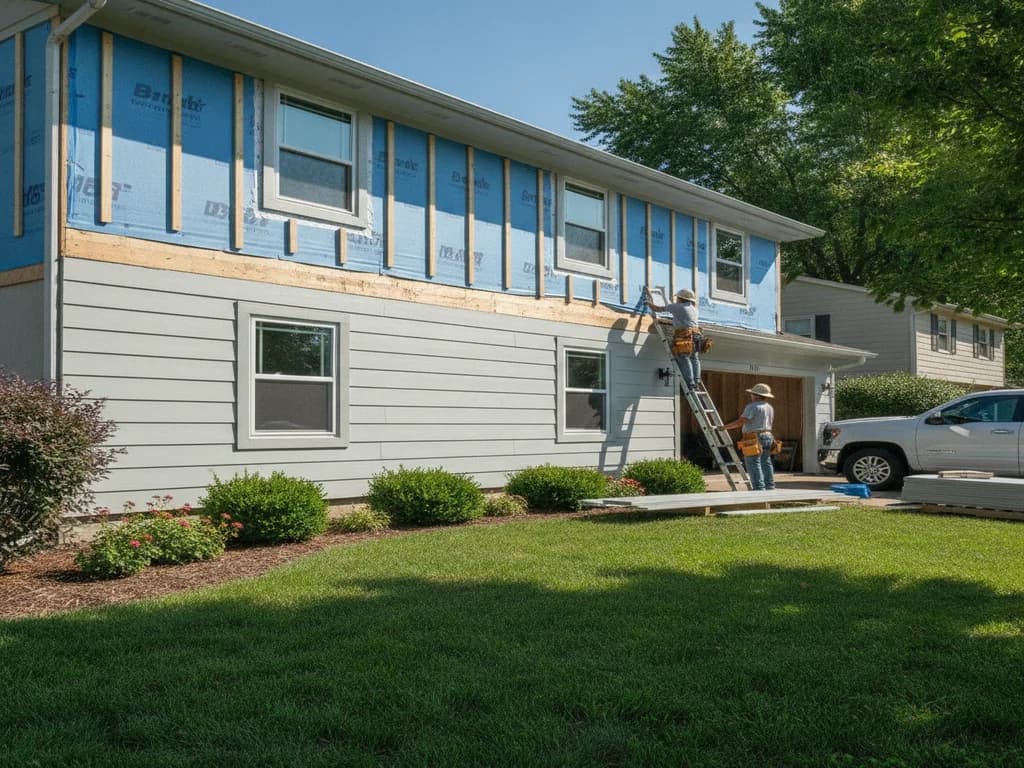
Your material choice shapes both the up-front cost and the decades of performance that follow. Here is how the main options stack up for the Sacramento-region climate.
Fiber cement
Premium, most popular upgrade
Fiber cement (for example, James Hardie products) is the go-to premium re-side in the region. It resists moisture, rot, and insects, holds paint well, stands up to intense summer sun, and — being non-combustible — is a strong fit for wildfire-prone areas under CBC Chapter 7A. It costs more up front than vinyl and is heavier and more labor-intensive to install, but its durability and curb appeal are why it is the most-requested upgrade on quality remodels.
Engineered wood
Warm wood look, lighter than fiber cement
Engineered wood siding (for example, LP SmartSide) gives the look of real wood with better resistance to moisture and impact than natural wood, and it is lighter and quicker to install than fiber cement. It sits between vinyl and fiber cement on both cost and performance and is a strong Northern California choice outside the highest fire-hazard zones.
Vinyl
Budget-smart, low maintenance
Vinyl remains the most budget-friendly, lowest-maintenance option and has improved considerably in appearance and thickness. Insulated vinyl adds a bit of R-value. It is the most cost-effective way to fully re-side a home, though it is less heat-resistant than fiber cement and, being combustible, is a poor fit for high fire-hazard WUI areas.
Trim, fascia, and soffit
Part of every re-side
A re-side is not just the field siding. Trim, fascia, soffit, corner boards, and flashing are part of the system and part of the budget. Skimping here is where water eventually finds its way in, so a complete envelope package matters as much as the panels themselves.
Across these options, vinyl is typically the most economical way to re-side a home, engineered wood sits in the middle, and fiber cement is the premium tier. The gap between them widens on larger or taller homes, because material cost and labor both scale with the amount of wall and the difficulty of reaching it.
Every siding budget is a mix of the same factors. Understanding their relative weight tells you where the money goes before you ever pick a color.
Siding is priced by the wall area, so square footage of exterior wall is the primary driver — and it is not the same as floor area. A two-story home has far more wall than a ranch of the same footprint. Height also means staging and safety measures that add labor.
Vinyl, engineered wood, and fiber cement carry meaningfully different material and labor costs. This is the biggest lever you control, and it is worth weighing lifetime durability and fire performance against up-front price rather than choosing on sticker alone.
Gables, dormers, multiple corners, intricate trim, and mixed materials all add cut time and labor. A simple rectangular elevation goes faster than a home with lots of angles, peaks, and architectural detail.
Removing old siding, hauling it away, and inspecting the sheathing beneath is real labor and disposal cost. Homes with multiple old layers, or older stucco and wood, take longer to strip than a straightforward vinyl tear-off.
A quality re-side includes a weather-resistive barrier (house wrap) and any sheathing repair found during tear-off. Rotted or damaged sheathing has to be replaced before new siding goes on — the right time to do it, and a common source of scope additions.
A re-side is the one time your walls are fully exposed, and on the region's older homes that reliably surfaces conditions worth addressing. Each of these is far cheaper to handle with the siding already off than to discover through a leak a year later.
Rotted sheathing and framing
Once old siding comes off, tear-off frequently reveals water-damaged sheathing or framing, especially around windows, at the base of walls, and under failed flashing. It must be repaired before new siding goes on, and it is the most common reason a siding scope grows during the project.
Lead paint on pre-1978 homes
The Sacramento region has many older homes, and those built before 1978 are likely to have lead-based paint on wood siding and trim. Disturbing it triggers federal EPA lead-safe work rules, which affect how tear-off is handled and add cost.
Missing or failed house wrap
Older homes were often sided without a modern weather-resistive barrier. Adding proper house wrap and flashing during a re-side is a major durability upgrade — and part of why a re-side is a good moment to fix the whole envelope, not just the surface.
Old insulation and air leakage
With the siding off, it is often the ideal time to address exterior air sealing or add continuous insulation, which also helps meet Title 24 energy goals. It is optional, but doing it during a re-side is far cheaper than as a separate project later.
Buried pest or moisture damage
Long-term moisture behind old siding can bring hidden pest activity or persistent damp. Catching it during tear-off protects the new installation and the structure behind it.
Fire-hazard zones shape the scope
Much of the Sacramento region's foothills sit in high or very high fire-hazard severity zones and the wildland-urban interface. In those areas the California Building Code's Chapter 7A requires ignition-resistant exterior walls, which can steer a re-side toward non-combustible cladding such as fiber cement and shape the cost accordingly.
If your home is in or near a fire-prone area, it is worth confirming your zone and the applicable Chapter 7A requirements before you settle on a material. A re-side is a natural moment to reduce ignition risk on the exterior wall — honestly framed, siding is one part of hardening a home, not a promise it will never burn. We can fold that into the scope and give you a clear, fixed price.
Siding installs across most of the year in our mild climate, but late spring through early fall offers the most reliable, dry weather for tear-off and installation. Peak season runs high on demand, so scheduling in late summer or fall can mean more flexibility. Whatever the season, tear-off should never be left open to a winter storm, so we plan work around weather windows.
Siding replacement often requires a permit, and the authority depends on your city — the City or County of Sacramento, or a Placer or El Dorado County municipality such as Roseville, Rocklin, Folsom, or El Dorado Hills — with some HOAs reviewing exterior changes as well. We handle permits and any HOA submittals as part of the project.
A dependable siding budget comes from a clear process. Here is the approach we walk Sacramento-region homeowners through before tear-off begins.
Measure the real wall area and choose a material
Start from exterior wall area, not floor area, and pick your material tier — vinyl, engineered wood, or fiber cement. Material choice and total wall area together set the majority of the budget.
Plan the whole envelope, not just the panels
Budget for trim, fascia, soffit, flashing, and house wrap as part of the system. A complete envelope is what keeps water out; a panels-only bid is an incomplete project.
Reserve a contingency for tear-off surprises
Set aside a contingency for sheathing and framing repair uncovered when the old siding comes off. On older Sacramento-region homes, some hidden damage is common, and this reserve keeps the project moving.
In a fire-hazard zone, plan for ignition-resistant materials
If your home is in a high or very high fire-hazard severity zone or WUI area, budget for non-combustible cladding that meets CBC Chapter 7A. It can shape material choice and cost, and it is worth confirming your zone before you scope.
Get a fixed-price, line-item proposal
Insist on a written scope with a fixed price broken out by line item — material, tear-off, wrap, trim, and repairs. That is how we quote every Sacramento-region re-side, tied to your actual home rather than a per-square-foot average.
For a broad frame of reference, national industry surveys such as Remodeling magazine's annual Cost vs. Value report track typical siding-replacement ranges and resale return by region. Use them as a sanity check, not a quote — the only number that matters for your home is the fixed-price proposal we prepare after measuring it.
A cheap siding bid often wins by skipping tear-off, house wrap, or repairs — the parts that keep water out. Compare on the full system, not the panel price.
- Confirm the bid includes tear-off, disposal, house wrap, and flashing — not just installing panels over whatever is there.
- Ask how sheathing or framing repairs found during tear-off are priced, before you sign.
- Compare the exact material and product line; fiber cement, engineered wood, and vinyl are not interchangeable on price or performance.
- Check that trim, fascia, soffit, and corner details are in the scope, since these are where water intrusion starts.
- In a fire-hazard zone, verify the cladding meets CBC Chapter 7A ignition-resistant requirements for your area.
- Verify CSLB licensing and insurance, manufacturer certification for the product, and a written workmanship warranty.
A full re-side is a significant investment, and financing options are available for homeowners who prefer to spread the cost. Either way, the best first step is a fixed-price proposal, so any financing conversation is grounded in a real number for your home.