Energy efficiency is not a bolt-on to a Northern California remodel — it is written into the building code. California's Title 24 energy standards set minimum performance for windows, insulation, heating and cooling, and more, and when you remodel, the parts of the home you touch generally have to meet the current standard. For homeowners that is not red tape to fear; it is a framework that pushes a remodel toward a home that is quieter, more comfortable, and cheaper to run.
This guide explains, in plain English, what Title 24 is, when a remodel triggers it, and the upgrades that matter most — high-performance windows, insulation and air sealing, cool roofs, and efficient HVAC and heat pumps. It also explains why the right answer depends on where your home sits, from the hot Central Valley floor to the foothills to the milder coast. We cite the primary sources — the California Energy Commission, U.S. Department of Energy, Lawrence Berkeley National Laboratory, ENERGY STAR, and the NFRC — and we do not invent numbers. Where we mention a figure, it is attributed to its source and framed as a range, never a guarantee for your home.
Title 24 is the California Building Standards Code. Its Part 6 — the Building Energy Efficiency Standards, administered by the California Energy Commission — sets the minimum energy performance every California remodel has to meet. It is updated on a regular cycle and is climate-zone specific, so the exact requirement depends on where your home is.
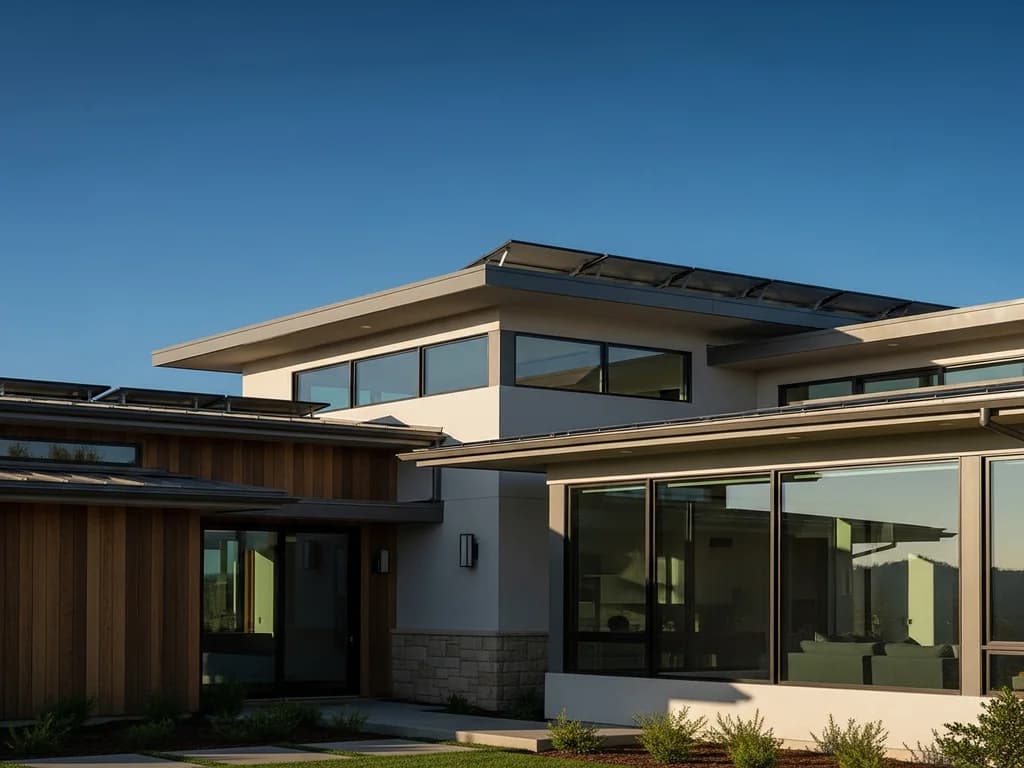
You do not have to renovate the whole house to code — but the parts you touch generally have to meet the current standard. These are the most common triggers.
Swap in new windows and, per the California Energy Commission's Building Energy Efficiency Standards, the replacements generally have to meet the current U-factor and solar-heat-gain limits for your climate zone. This is the single most common way a remodel touches Title 24.
A re-roof can trigger cool-roof and, in many cases, roof-deck insulation requirements. The specifics depend on roof type, slope, and climate zone, which is why an honest scope confirms the rules for your address before pricing.
Replacing a furnace, air conditioner, or ductwork brings equipment-efficiency and duct-sealing requirements into play, and altered ducts often must be tested for leakage.
Building new conditioned space — an addition or an ADU — means that new space must meet the standard for insulation, windows, and mechanical systems. Opening up walls during a major remodel is also the natural moment to bring insulation and air sealing up to today's code.
Windows are where most homeowners first meet Title 24, and the NFRC label is how you compare them honestly. Two numbers do the heavy lifting.
U-factor
U-factor measures how well a window resists heat flow — the lower the number, the better the insulation. The NFRC (National Fenestration Rating Council) standardizes how U-factor is measured and reported on the label, so you can compare products fairly. A low U-factor keeps winter heat in and, on the Central Valley floor, summer heat out.
SHGC (solar heat gain coefficient)
SHGC measures how much of the sun's heat passes through the glass. A lower SHGC blocks more solar heat — valuable on west- and south-facing walls in a hot inland climate. The U.S. Department of Energy notes that the best SHGC depends on climate and orientation, which is why one number does not fit every window on the house.
The ENERGY STAR shortcut
ENERGY STAR certifies windows to U-factor and SHGC criteria by climate region, so a certified window for California is a reliable starting point. ENERGY STAR reports that replacing old, inefficient windows can meaningfully lower household energy bills — a range, not a fixed promise, and a real reason to weigh glass performance, not just frame looks.
For a fuller breakdown of how this plays out on a Northern California window project, see our companion article on Title 24 and window replacement.
Windows get the attention, but the walls, ceiling, and floor around them do most of the work. Insulation and air sealing are usually the best value in the whole project — and a remodel is the cheapest time to improve them.
Insulation slows the heat you pay to fight
Insulation is measured in R-value — resistance to heat flow — and recommended levels rise with how hot or cold a climate is. The U.S. Department of Energy and its national labs publish R-value guidance by climate zone; the hot Central Valley and cold Sierra need more than the mild coast. A remodel that opens walls, ceilings, or a crawlspace is the cheapest time to add it.
Air sealing is the quiet workhorse
Even well-insulated homes leak air through gaps, penetrations, and old ductwork. The Department of Energy consistently rates air sealing among the most cost-effective efficiency improvements, because it stops conditioned air from escaping. Sealing the envelope and ducts often does more for comfort than any single appliance swap.
Building science, not guesswork
Lawrence Berkeley National Laboratory — the U.S. Department of Energy lab whose research underpins much of California's window and envelope standards — has spent decades studying how heat, air, and moisture move through walls. The practical takeaway for homeowners: the envelope works as a system, so windows, insulation, and air sealing pay off most when planned together.
Much of the building science behind California's standards traces to Lawrence Berkeley National Laboratory, a U.S. Department of Energy lab whose window and envelope research is a foundation of modern energy codes.
Re-roofing is a Title 24 moment
A cool roof reflects more sunlight and radiates heat away, so less of the Central Valley's summer sun turns into attic — and then living-space — heat. Title 24 brings cool-roof and roof-insulation requirements into play when you re-roof, with the specifics depending on roof type, slope, and climate zone. Because you are already tearing off the old roof, it is the natural, cost-effective time to capture the upgrade.
On the hot Valley floor the benefit is real; in the milder coastal zones it is smaller. We confirm what applies to your roof and climate zone before scoping, so the recommendation fits your home rather than a generic rule of thumb.
Heating and cooling is the largest energy load in most homes, so the equipment and the ducts that serve it are where efficiency compounds. A tighter envelope and a right-sized, efficient system reinforce each other.
Right-size before you replace
An oversized system short-cycles, wastes energy, and cools unevenly. A tighter, better-insulated envelope often means the replacement system can be smaller — one reason envelope work and HVAC decisions belong in the same conversation.
Heat pumps: one system for both seasons
An electric heat pump both heats and cools, and modern cold-climate models perform well across Northern California's range. The U.S. Department of Energy and ENERGY STAR point to heat pumps as a high-efficiency path, and California policy increasingly favors them. They suit our mild-to-hot climate especially well.
Seal and test the ducts
Leaky ducts can waste a large share of the air a system moves. Title 24 requires duct sealing and testing when you alter a system, and it is one of the highest-value, lowest-glamour upgrades in any HVAC scope.
For federal guidance on equipment efficiency and heat pumps, the U.S. Department of Energy and ENERGY STAR are the authoritative starting points.
Title 24 is climate-zone specific for good reason: the smart upgrade on the Central Valley floor is not the smart upgrade in Truckee. Here is how the priorities shift across the region we serve.
Central Valley floor (Sacramento, Davis, Woodland, Folsom, Roseville)
Long, hot, dry summers and mild wet winters mean cooling load dominates. Here the highest-value moves are low-SHGC windows on sun-exposed walls, generous attic insulation, cool roofs, air sealing, and an efficient heat pump or AC. Cutting summer heat gain is the whole game.
Foothills (Auburn, Grass Valley, Nevada City, El Dorado Hills)
Hot summers with cooler nights and genuinely cold snaps in winter. The envelope has to work in both directions, so balanced windows (low U-factor with a moderate SHGC), strong insulation, and a heat pump that handles cold mornings all earn their keep.
Sierra / Tahoe & Truckee
Cold, snowy winters flip the priority to heat retention: very low U-factor windows, deep insulation, and tight air sealing matter most, with solar heat gain often welcome rather than unwanted.
Coastal & Bay-influenced (Marin, Peninsula, Santa Cruz, Monterey)
Mild, marine air keeps both heating and cooling loads modest. The payoff shifts toward comfort, moisture management, and modest efficiency gains rather than fighting extreme heat or cold.
Not every efficiency upgrade returns the same value. Drawing on Department of Energy and ENERGY STAR guidance — as priorities, not a quote — this is roughly the order that tends to pay off for Northern California homes.
Air sealing and attic insulation
Consistently among the most cost-effective upgrades in Department of Energy guidance — relatively low cost, immediate comfort, and lasting savings, especially on the hot Valley floor.
High-performance windows on the worst-exposed walls
Replacing failing single-pane windows, prioritizing the sun-beaten west and south elevations, delivers the biggest comfort-and-efficiency gain per dollar. ENERGY STAR frames the savings as a range, not a fixed figure.
Efficient heat pump when the old system is failing
The best time to move to a heat pump is when the existing furnace or AC is at end of life, so you capture the efficiency gain without scrapping a working system.
Cool roof at re-roof time
Cool-roof upgrades pay back best when you are re-roofing anyway — a Title 24 trigger that turns a necessary project into an efficiency win in a hot climate.
One honest caveat: savings figures from ENERGY STAR and the Department of Energy are ranges based on national or regional averages. Your actual result depends on your home, your habits, utility rates, and the weather. We scope every efficiency upgrade around your real home — never a promised dollar figure.