Why Windows Work Hard in Northern California
Windows carry a heavy load in Northern California because our region is not one climate — it is several. A home in the Sacramento valley bakes through long, hot, dry summers where the job is to keep solar heat out. A home in the foothills or up in Truckee faces genuinely cold winters where the job flips to keeping heat in. Along the coast, mild temperatures come with damp, salt-laden air. The same window that excels in one of these settings can underperform in another.
When windows are old, poorly sealed, or single-pane, they become one of the biggest sources of wasted energy and discomfort in the home. You feel it as rooms that never cool down on a Central Valley afternoon, drafts near the glass on a cold foothill morning, and an HVAC system running longer than it should at both ends of the year. Upgrading windows is one of the more noticeable comfort improvements a homeowner can make, and it pays back in steadier indoor temperatures and quieter rooms.
Two frameworks govern getting it right in California: the independent NFRC ratings that let you compare window performance honestly, and California's Title 24 energy code, which sets minimum requirements when you replace windows. This guide explains how to read the ratings for our climate zones and what the code asks of you.
Signs It's Time to Replace Your Windows
Windows rarely fail all at once. They decline gradually, so it is easy to live with underperforming windows longer than you should. Watch for these signals that replacement is worth considering:
- Drafts you can feel. If you sense moving air near a closed window on a cold or windy day, the seal or the sash is no longer doing its job.
- Condensation between the panes. Fog or moisture trapped inside a dual-pane unit means the seal has failed and the insulating gas has escaped — that window is no longer performing as designed.
- Rooms that overheat in summer. A west- or south-facing room that becomes unbearable on a hot valley afternoon often has clear, unshaded single-pane glass letting solar heat pour in.
- Difficult operation. Windows that stick, will not stay open, or no longer lock securely have worn out mechanically, which often means they no longer seal well either.
- Rising energy bills without a clear cause, especially in older homes with original single-pane windows.
- Rot, water stains, or peeling around wood frames, a sign moisture is getting in and the window is past its service life.
- Outside noise coming through clearly, which modern multi-pane windows noticeably reduce.
A single symptom does not always mean full replacement — sometimes weatherstripping or a repair suffices. But when several show up together, or the windows are original single-pane units on an older home, replacement usually delivers the comfort and efficiency that patchwork fixes cannot.
Reading NFRC U-Factor and SHGC for Our Climate Zones
Every certified window carries an NFRC label, and two numbers on it matter most for Northern California. Understanding them lets you compare products honestly instead of relying on a salesperson's framing.
- U-factor measures how well a window keeps heat from escaping. A lower U-factor means better insulation — which matters most in the cold foothill and mountain winters around Auburn, Grass Valley, and Tahoe.
- Solar Heat Gain Coefficient (SHGC) measures how much solar heat the window lets through. A lower SHGC keeps rooms cooler — which matters most in the hot Central Valley, where cutting summer solar gain is the priority.
The reason this matters so much in our region is that California is divided into distinct climate zones, and the right balance of these two numbers shifts across them. In hot Sacramento-valley zones, a low SHGC to control cooling load usually carries the most weight. In colder high-elevation zones, a low U-factor to hold heat becomes more important, while some winter solar gain is welcome. A window tuned for one zone is not automatically ideal for another — which is exactly why California ties its requirements to climate zone rather than applying one national number.
The practical takeaway: look at the NFRC label, know which climate zone your home is in, and choose glass whose U-factor and SHGC suit that zone. A knowledgeable installer will steer you to the right numbers rather than selling the same product everywhere.
What Title 24 Requires When You Replace Windows
California's Title 24 Building Energy Efficiency Standards are not just for new construction — they apply when you replace windows in an existing home, too. That is a key difference from many other states, and it is why window replacement here is a permitted, code-governed project rather than a simple swap.
In broad terms, here is what Title 24 means for a replacement project:
- Minimum performance for the climate zone. Replacement windows generally must meet maximum U-factor and SHGC values set for your specific California climate zone. The code sets the ceiling; you choose a product at or below it.
- NFRC-rated products. Compliance is demonstrated using the window's NFRC-certified ratings, which is why that label matters so much — it is how the numbers are verified.
- Permits and inspection. Window replacement typically requires a permit, and the work is verified against the standards. A contractor usually handles pulling the permit as part of the project.
- Periodic updates. Title 24 is revised on a multi-year cycle, so the exact required values change over time. The current code edition governs your project, which is why we point to the California Energy Commission rather than quoting fixed numbers that may be out of date.
Because the specifics vary by climate zone and by code edition, the honest approach is to confirm the current requirement for your address rather than assuming a figure. Working with a contractor who pulls the permit and selects code-compliant windows takes that burden off you. Our window replacement service handles both product selection and the permitting that Title 24 requires.
Dual vs. Triple Pane, Low-E, and What to Look For
Beyond meeting code, a few features separate a window that performs for decades from one that disappoints. Here is what actually matters for a Northern California home.
- Dual-pane glazing is the baseline. Two panes with an insulating gas fill dramatically outperform single-pane and are the practical minimum for meeting Title 24 across our zones.
- Triple pane for cold zones. In the coldest foothill and mountain climates, a third pane lowers the U-factor further for meaningful winter comfort. In the hot valley, dual-pane with the right coatings is usually the better value, since cooling — not deep insulation — is the main challenge.
- Low-emissivity (low-E) coatings. These microscopically thin coatings reflect heat and are how a window achieves a low SHGC for our hot summers while still insulating. The coating package can be tuned toward heat rejection or heat retention depending on your zone.
- A quality frame material. Vinyl, fiberglass, and clad-wood frames each have strengths in insulation, durability, and appearance. Along the coast, corrosion-resistant materials matter more against salt air.
- Tempered glass where it counts. Beyond code-required safety locations, dual-pane tempered glass resists breakage from radiant heat — a real benefit for wildfire hardening in WUI areas, where windows are a known point of failure during an ember event.
- A meaningful warranty on both glass and frame, from a manufacturer that will still be around to honor it.
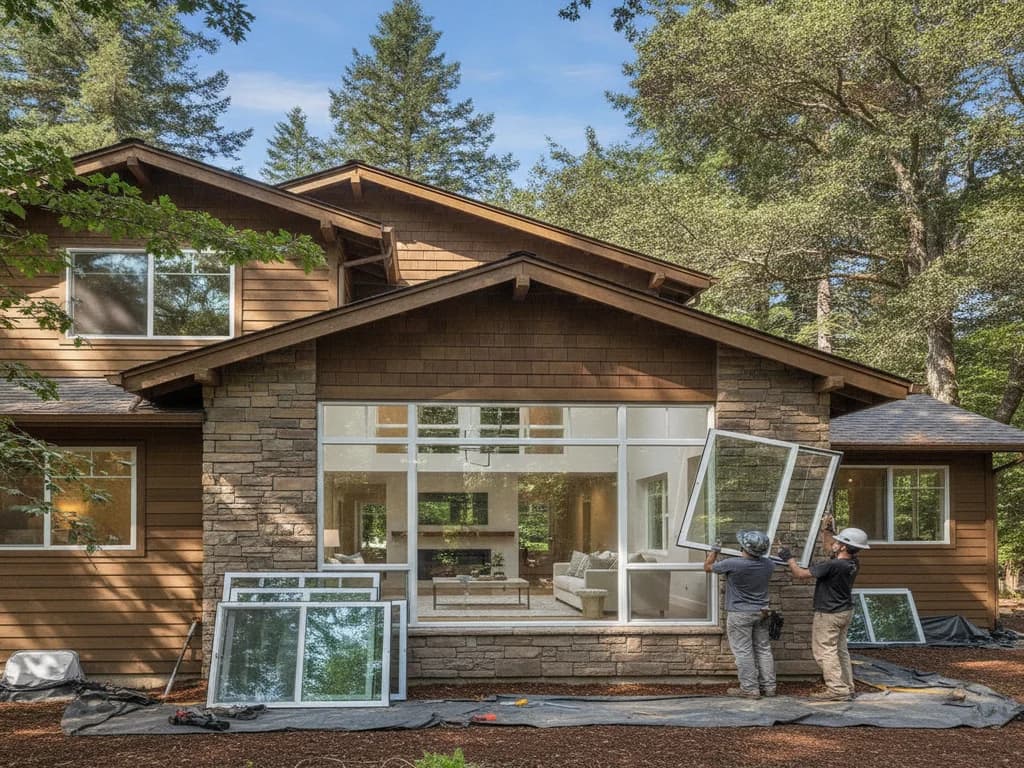
Just as important as the window is the installation. Even an excellent, code-compliant window underperforms if it is set out of square, poorly insulated around the frame, or flashed incorrectly — gaps around the opening let air and water bypass the window entirely. Professional installation that air-seals and properly flashes the opening is what lets the product deliver the ratings it earned on the NFRC label.
Planning a Window Project in Northern California
Replacing windows is a project you can approach at your own pace, and a little planning makes it smoother.
Decide on scope. Some homeowners replace every window at once for a consistent look and the biggest efficiency gain; others prioritize the worst offenders first — the sun-blasted west-facing rooms, or the drafty side of a foothill home — and phase the rest over time. Both approaches are valid, and both still meet Title 24 for the windows you replace.
Match the glass to your zone. This is the step that pays off for years. A home in the Sacramento valley wants strong solar-heat control; a home in Truckee or the foothills wants a low U-factor to hold heat. Choosing the right NFRC numbers for your climate zone is what turns a code-compliance exercise into a genuine comfort upgrade.
Consider the whole envelope. Windows work alongside your siding, doors, and insulation. If an aging exterior or a wildfire-hardening plan already has you looking at fiber cement siding or a broader whole-home exterior project, bundling the work can be efficient — and tempered dual-pane windows fit naturally into a home-hardening upgrade.
When you are ready, the honest next step is a free on-site assessment. We will look at your current windows, identify your climate zone and the Title 24 requirement for it, talk through where you feel the biggest comfort problems, and recommend NFRC-rated options that fit your home and your zone. Request your free estimate to get started.
Does Title 24 apply when I just replace windows in an existing home?
Yes. California's Title 24 energy standards apply to window replacement in existing homes, not only new construction, which is a key difference from many other states. Replacement windows generally must meet maximum U-factor and SHGC values set for your specific climate zone, compliance is shown using the window's NFRC ratings, and the work typically requires a permit. Because the code is revised on a multi-year cycle, confirm the current requirement for your address rather than assuming a fixed number.
What do U-factor and SHGC mean on a window label?
U-factor measures how well a window resists heat loss; a lower number means better insulation, which matters most in cold foothill and mountain winters. SHGC (Solar Heat Gain Coefficient) measures how much solar heat the window lets in; a lower number keeps rooms cooler, which matters most in the hot Central Valley. Both come from the independent NFRC label. Because Northern California spans several climate zones, the right balance of these two numbers depends on which zone your home is in.
Should I get dual-pane or triple-pane windows?
Dual-pane with low-E coatings is the practical baseline across Northern California and is usually the best value in the hot Central Valley, where controlling summer solar heat matters more than deep insulation. Triple-pane makes the most sense in the coldest foothill and mountain zones, where a lower U-factor delivers real winter comfort. Matching the glass package to your climate zone matters more than simply adding panes everywhere.
Do energy-efficient windows help with wildfire protection?
They can. In wildland-urban interface areas, windows are a known point of failure during a wildfire because single-pane glass breaks under radiant heat and lets embers inside. Dual-pane windows with tempered glass resist that breakage far better and are part of California's WUI/Chapter 7A hardening approach. So a window upgrade chosen for Title 24 energy compliance can also strengthen a home's wildfire resilience when tempered glass is specified. No window makes a home fireproof, but the right glass improves the odds.