James Hardie fiber cement is sold in several textures and profiles, and the one you choose sets the character of the whole house. A subtle wood grain reads as classic and warm; a dead-flat smooth face reads as modern; a beaded lap reads as traditional. This guide walks through the main James Hardie textures — Select Cedarmill®, Smooth, Beaded, Stucco, and Sierra 8 — and the architectural styles they help create.
We describe each texture and the looks it supports, how designers mix profiles to add interest, and how to match a Hardie treatment to the home styles we see across Sacramento, the Placer and El Dorado foothills, and Napa and the coast. Product facts here are attributed to James Hardie, and we link their official product pages throughout so you can confirm current options and availability.
Texture and profile facts are attributed to James Hardie. Confirm current options on the James Hardie siding catalog.
James Hardie offers its siding in several textures, applied across lap and panel products. Here are the ones that define most projects, with the James Hardie product page for each.
Select Cedarmill®
The most popular
A subtle, natural cedar wood-grain texture — James Hardie's most popular finish. It gives lap and panel siding the warmth of painted wood without the maintenance, and it suits the widest range of homes, from Craftsman to farmhouse. Offered on HardiePlank® lap and HardiePanel® vertical siding.
Smooth
Clean and modern
A flat, grain-free face for a crisp, contemporary look. Smooth lap and panel read as tailored and minimal, and pair well with modern and transitional architecture where the emphasis is on clean lines rather than texture.
Beaded
Traditional detail
A HardiePlank lap profile with a traditional bead detail along the bottom edge of each course, casting a fine shadow line. Beaded siding lends a refined, classic character to colonial, cottage, and traditional homes.
Stucco
Panel texture
A textured stucco-look finish offered on HardiePanel vertical siding — a way to get a stucco appearance in panel form, useful for Mediterranean, Spanish, and contemporary elevations or as a complement to real plaster.
Sierra 8
Grooved panel
A HardiePanel profile with grooves spaced every 8 inches, creating a repeating vertical-line pattern. Sierra 8 gives a clean, rhythmic modern facade and is a distinctive alternative to flush or board-and-batten panel looks.
Each texture supports particular architectural styles. Here is how the profiles translate into the looks homeowners ask for most.
Craftsman & bungalow
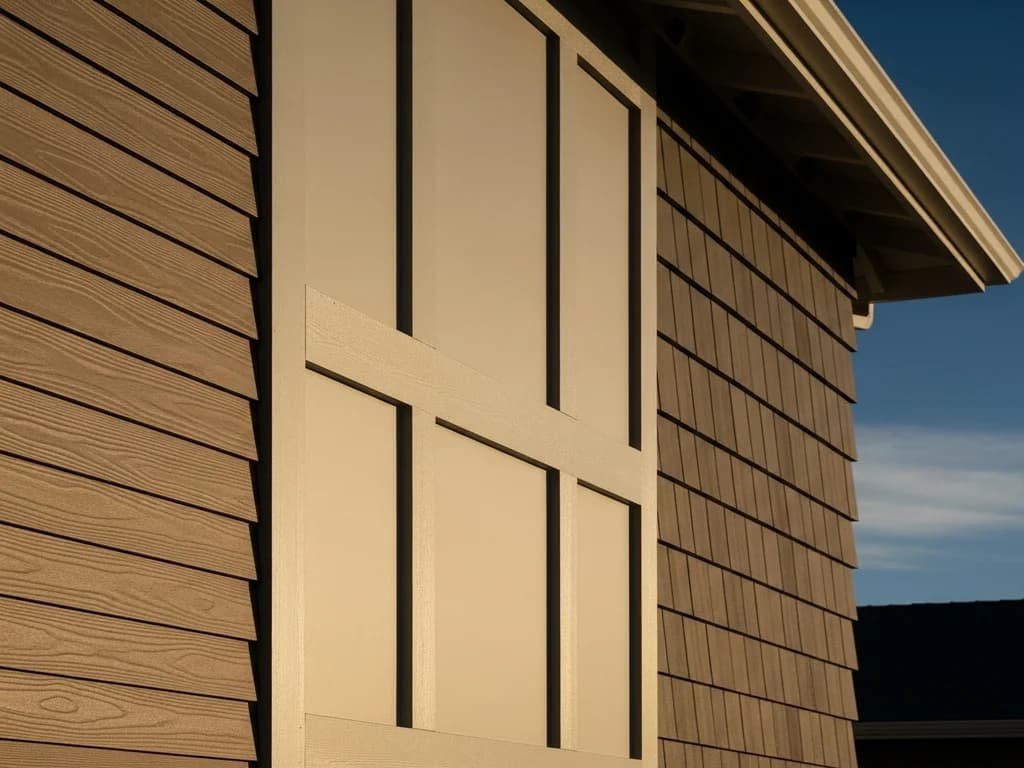
Select Cedarmill lap on the body, often paired with Hardie® Shingle in the gables and generous Hardie® Trim around windows and porches. The wood-grain texture is the signature of the Craftsman look without the upkeep of real cedar.
Modern farmhouse — board-and-batten
The board-and-batten look is achieved with HardiePanel vertical siding and HardieTrim battens applied over it at regular spacing. In Smooth it reads clean and contemporary; in Cedarmill it feels warmer and more rustic — the defining move of the modern-farmhouse style.
Modern & contemporary
Smooth lap or panel, or the grooved Sierra 8 panel, deliver the flat, linear surfaces modern design wants. Wide reveals, minimal trim, and a restrained color palette complete the look.
Cottage & coastal shingle
Hardie Shingle siding creates the shake-and-shingle look for cottages, coastal homes, and accent gables — the charm of cedar shingles with fiber cement durability against sun and salt air.
Note that board-and-batten and shake looks are built from products, not a single named board: board-and-batten uses HardiePanel plus HardieTrim battens, and the shake/shingle look uses Hardie Shingle siding. Our Hardie products guide breaks down the full lineup.
Designers rarely use a single profile across an entire house. The most compelling exteriors combine two or three: a primary field texture on the walls, a contrasting profile for accents, and trim to frame it all. A common recipe is Cedarmill lap on the main walls with Hardie Shingle in the gables, tied together with wide Hardie Trim.
Board-and-batten on a front-facing bay or the second story over lap siding below is another classic mix, as is a stucco or Sierra 8 panel to set off an entry. The key is contrast with restraint — one dominant texture, one supporting accent, and consistent trim — so the elevation reads as designed rather than busy. We help you land a combination that fits your home's architecture and your street.
The right Hardie treatment depends on where your home is and what fits the neighborhood. Here is how the profiles map onto the regions we serve.
Newer tract and semi-custom homes across Roseville, Rocklin, and Folsom take well to modern-farmhouse board-and-batten and Cedarmill lap, often with a smooth-trim contrast. It is the look driving much of the region's remodeling right now.
Craftsman and rustic homes in Auburn, Grass Valley, and El Dorado Hills suit Cedarmill lap with shingle accents and earthy colors that sit comfortably against oak and pine. Fire-resistant fiber cement is also a practical fit in these WUI foothill areas.
Farmhouse, cottage, and coastal styles in Napa and the Central Coast lean on board-and-batten, shingle, and clean lap. Fiber cement stands up to sun and coastal salt air where wood struggles.
We install James Hardie across Northern California, including Roseville, Folsom, and Napa. James Hardie also engineers its products by climate — most of California is HZ10, while the high Sierra and Tahoe are HZ5 — which we cover in the warranty and HardieZone guide.