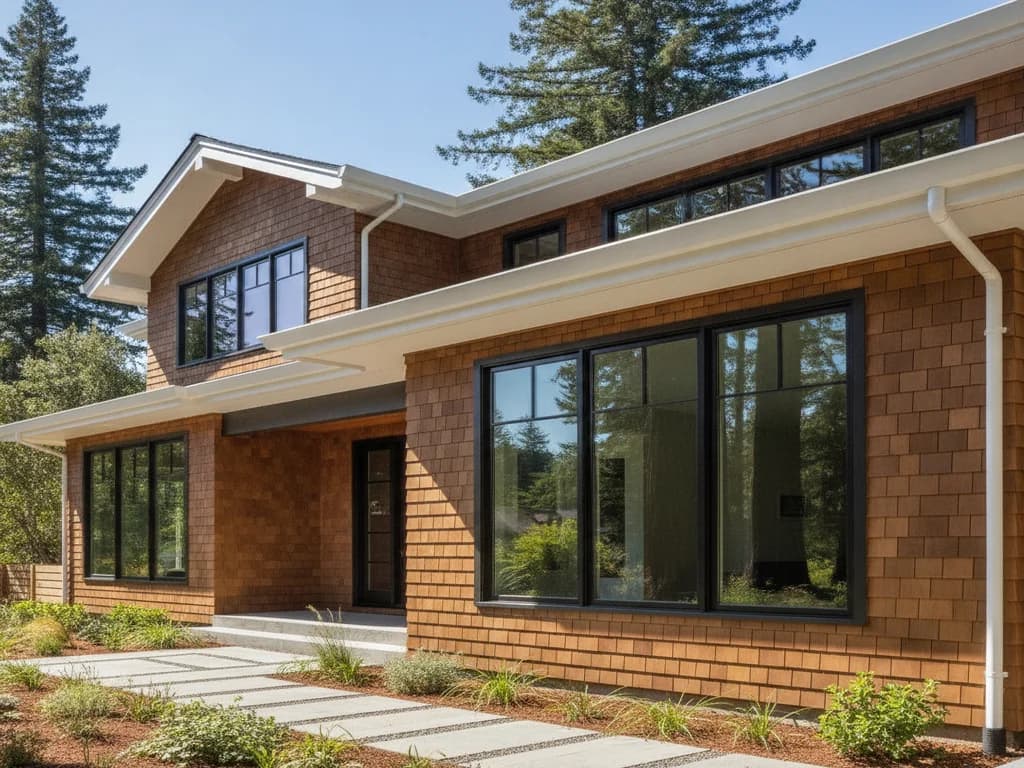
Trim, Fascia & Soffit in Northern California
The trim, fascia, and soffit are where exteriors often fail first — wood boards dry-rot at the edges and open eaves collect debris. In fire-hazard foothill and Wine Country areas, open eaves are also a place embers can catch. Our team replaces failing wood with low-maintenance PVC or composite and can enclose eaves with ember-resistant detailing so the whole roofline lasts and helps harden the home.
The trim, fascia, and soffit are where Northern California exteriors usually fail first — wood rots at the edges from wet winters, salt air, and Sierra freeze-thaw, and open or clogged soffit lets heat and, in fire zones, embers into the attic. As part of our exterior remodeling services, we replace failing wood with low-maintenance PVC or composite and restore proper — or ember-resistant — ventilation so the whole roofline lasts.
- Fascia board replacement in wood, composite, or PVC
- Enclosed, boxed eaves for fire-hazard areas
- Ember-resistant vent detailing at soffits
- Window and door trim replacement
- Corner boards and frieze detailing
- Dry-rot repair at rakes, eaves, and edges
- PVC and composite for rot-free longevity
- Coordinated color match to siding and gutters
- Prep for gutter reattachment
- Full exterior trim packages with a re-side
Edges Take the Water
Fascia and rake boards sit right where overflowing gutters and winter moisture collect. Once paint fails, wood wicks water and rots from the edges in — the most common exterior repair we see.
Trapped Attic Heat
Solid or painted-over soffit chokes attic airflow, so hot summer air has nowhere to go. That trapped heat ages shingles and drives cooling costs up.
Eaves as Ember Traps
In fire-hazard zones, open eaves and standard vents let wind-blown embers reach the attic. Enclosing the eaves and fitting ember-resistant vents closes that ignition path while keeping airflow.
Gutter Interaction
Fascia carries the gutters. Rotted fascia can't hold fasteners, so gutters pull loose and overflow — accelerating the damage. Sound fascia is the foundation for a working gutter system.
Trim Inspection
We inspect fascia, soffit, and trim for dry rot, insect damage, and — in fire-hazard areas — open eaves and unscreened vents where embers can enter.
Material Selection
You choose materials and colors — PVC and composite are popular for their resistance to rot — and we plan enclosed eave and vent detailing where fire hardening calls for it.
Removal & Repair
Failing boards are removed, any underlying dry rot is repaired, and we confirm the roofline and edges are sound before installing new trim.
Installation & Finish
New fascia, soffit, and trim are installed and sealed, ember-resistant vents are fitted where needed, and everything is finished to match your siding and gutters.
PVC vs. Composite vs. Wood Trim
PVC (cellular) trim is fully waterproof and won't rot, making it the go-to for fascia and any board near the ground or the gutters. It takes and holds paint well and machines like wood.
Composite trim blends wood fiber and resins for a solid, rot-resistant board with a slightly warmer look. It's a strong choice for detailed trim packages.
Fiber cement & engineered-wood trim let you match the trim to the siding. HardieTrim® boards pair with a James Hardie exterior for window and door surrounds, corners, and column wraps — and their non-combustibility suits fire-hazard zones — while LP® SmartSide® trim matches an engineered-wood re-side — both carry the same durability treatment as their siding lines.
Wood is still an option for tight budget or historic matching, but it needs a maintained paint seal to survive our moisture and sun. We usually steer fascia and high-exposure edges toward PVC, composite, or a matched fiber-cement board so the repair doesn't come back.
Balanced Ventilation & Ember-Resistant Eaves
A healthy attic needs balanced airflow — intake at the soffit and exhaust at the ridge. When we replace soffit, we size the venting to the attic so cool air can enter low and push hot air out the top, which protects the shingles and framing and helps keep the rooms below cooler under strong sun.
In a Wildland-Urban Interface area, that ventilation has to coexist with fire hardening. We can enclose open eaves and fit ember-resistant vents that maintain the airflow while closing an ember-entry point under Chapter 7A — part of broader wildfire home hardening. It's an easy detail to get wrong, and one we plan for every time.
Why do my fascia boards keep rotting?
It's usually a mix of moisture, overflowing gutters, and painted wood that loses its seal over time. Replacing rotted wood with PVC or composite trim breaks that cycle because those materials don't absorb water and won't rot the way wood does.
Should my eaves be enclosed for fire safety?
In fire-hazard areas, often yes. Open eaves can trap heat and let embers reach the underside of the roof. Boxing in the eaves with ignition-resistant materials and fitting ember-resistant vents is a recognized home-hardening step under California's WUI guidance. We can handle this as part of trim work or a broader hardening project.
Can you do trim work without replacing all my siding?
Yes. Trim, fascia, and soffit can be replaced on their own, and it's one of the higher-impact exterior updates for the cost. It also pairs naturally with a re-side or new gutters if you're planning those.
Why does PVC or composite trim outlast wood in Northern California?
Wood trim fails at the edges because it absorbs water, and wet winters, coastal salt air, and Sierra freeze-thaw accelerate the rot once the paint seal breaks. PVC and composite don't absorb water, so they don't rot, cup, or feed the cycle. They cost a bit more than wood up front but end the recurring fascia-rot problem that homeowners keep repainting and repairing.
How does soffit ventilation affect my roof and attic — and wildfire risk?
Vented soffit lets cooler air into the attic at the eaves so hot air can escape at the ridge, which helps prevent moisture buildup and premature shingle aging under strong sun. In Wildland-Urban Interface fire zones there's a second consideration: open eaves and standard vents are ember-entry points, so we can enclose the eaves and fit ember-resistant vents that maintain airflow while meeting Chapter 7A. We balance ventilation and fire hardening to your home's zone.
Can trim work be done without replacing my siding?
Yes. Trim, fascia, and soffit can be replaced on their own, and it's one of the higher-impact exterior updates for the cost — it sharpens the whole roofline and stops active rot. It also pairs naturally with a re-side, new gutters, or wildfire home hardening if you're planning those, since crews and access are already in place.
We provide trim, fascia & soffit to homeowners across the Sacramento region, the Placer and El Dorado foothills, and the Tahoe–Truckee area. Each community has its own dedicated page with local permitting, climate, and project detail — and each regional hub covers the surrounding areas we also serve.
- Trim, Fascia & Soffit in Sacramento
- Trim, Fascia & Soffit in Folsom
- Trim, Fascia & Soffit in El Dorado Hills
- Trim, Fascia & Soffit in Elk Grove
- Trim, Fascia & Soffit in Citrus Heights
- Trim, Fascia & Soffit in Fair Oaks
- Trim, Fascia & Soffit in Carmichael
- Trim, Fascia & Soffit in Davis
- Trim, Fascia & Soffit in Woodland
The following government agencies, industry organizations, and official resources provide additional information relevant to your remodeling project.
Ready to Start Your Remodeling Project?
Get a free, no-obligation estimate from Northern California's remodeling and exterior specialists. Licensed, insured, and ready to build.