Luxury vinyl plank, laminate, and tile now sit next to each other in every showroom, in visual styles so similar that many homeowners choose between them on price alone. That is the wrong axis. All three are competent floors. What separates them is how each one fails — and matching the failure mode to the room is the whole exercise.
LVP fails cosmetically: the wear layer abrades or a plank gets gouged, and the plank is replaced. Laminate fails at the core: water that sits at a seam long enough swells the fibreboard beneath, and the swelling does not reverse. Tile fails in the assembly: it is essentially indifferent to water and wear, but it cracks when the substrate beneath it moves. Decide which of those three risks you would rather carry in a given room, and the choice narrows quickly.
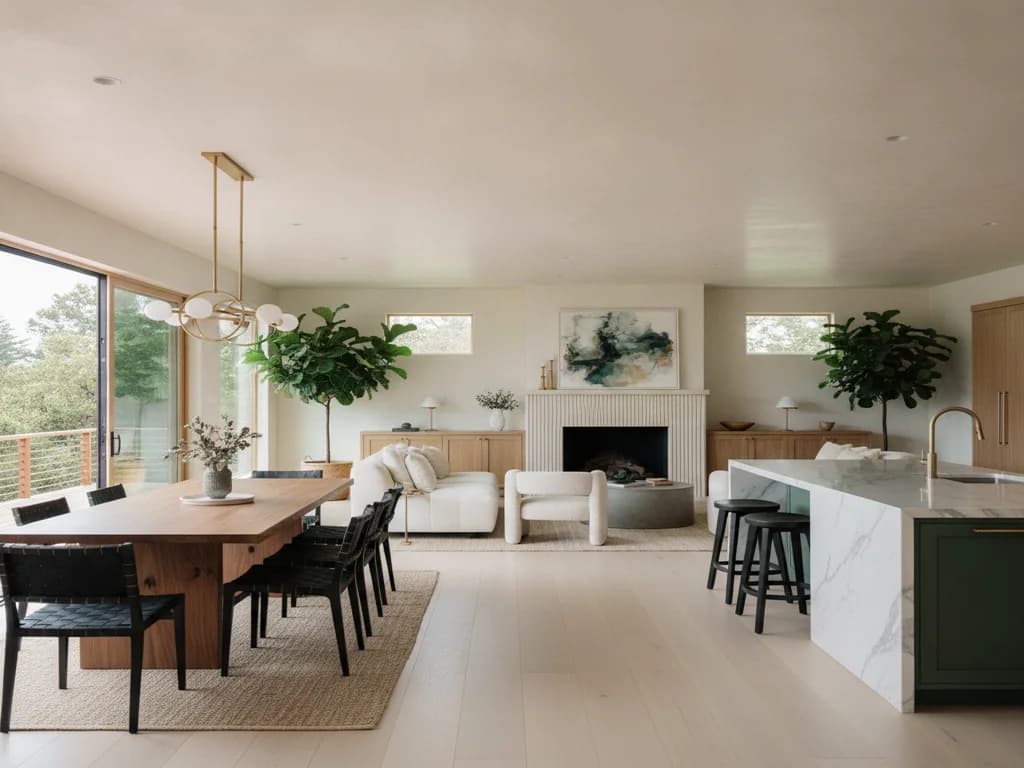
Luxury vinyl plank (LVP)
A multi-layer synthetic plank: a clear wear layer on top, a printed decorative film beneath it, and a core that is either rigid (the SPC and WPC families) or flexible. The core is polymer-based and does not absorb water, which is the product's defining property. Most LVP installs as a floating click-lock floor; glue-down products also exist and behave differently underfoot. Thickness, core type, and wear-layer depth vary widely across a category that is often sold as if it were one thing.
Laminate
A high-density fibreboard core carrying a printed decorative layer and a melamine wear surface fused under heat and pressure. That melamine surface is extremely hard and resists scratching and scuffing better than most people assume — laminate's reputation for being a lesser product has more to do with early-generation visuals than with surface durability. The core is wood-based, and that is where the vulnerability sits. Water-resistant and waterproof-rated laminates use treated cores and sealed edges to narrow the gap, with real but product-specific improvement.
Porcelain and ceramic tile
Fired clay, set in mortar over a prepared substrate, with grouted joints. Porcelain is denser and less absorbent than standard ceramic, which is why it is the usual choice for floors and for anything exposed to weather or heavy traffic. Tile is the only one of the three that is a site-built assembly rather than a manufactured plank: the substrate, the setting material, the movement joints, and the grout are as much a part of the floor as the tile itself.
This is the axis where the three genuinely separate, and it is worth being precise, because the marketing language is not.
Tile is unaffected by water. Porcelain in particular absorbs very little, and a properly installed tile floor tolerates standing water indefinitely. The caveat is that the tile being waterproof does not make the floor assembly waterproof — grout is porous, and what happens to the substrate beneath depends on how the assembly was built. In a wet area like a shower, that assembly is the whole subject; our shower waterproofing guide covers it separately.
LVP's core does not absorb water either. A spill left overnight on an LVP floor is a cleaning problem, not a flooring problem. What water can still do is travel through the seams to whatever is underneath — so LVP protects itself well but does not, by itself, protect the subfloor beneath it from a sustained leak.
Laminate is the one to place carefully. The melamine surface sheds water, but a seam that stays wet lets moisture reach the fibreboard core, and a swollen core edge is permanent — it does not dry back to flat. Water-resistant laminates have improved this considerably, and manufacturers now warrant specific exposure durations, but the underlying material is still wood-based. In a laundry room, a bathroom, or behind a dishwasher, that is a meaningfully different bet than LVP or tile.
The EPA's guidance on moisture in homes makes the general point that matters here: wet materials that are not dried quickly cause trouble. Choosing a flooring material whose core does not care is one way to remove that risk from a room entirely.
The principle is set out plainly in the EPA's guide to mold, moisture and your home, and for wet areas specifically see our shower waterproofing systems guide.
The wear layer is the spec, not the thickness
For LVP, overall plank thickness tells you about stability and feel; wear-layer thickness tells you about durability. It is measured in mils, and it is the number that determines how long the printed layer beneath survives traffic, grit, and pet claws. A thick plank with a thin wear layer is a comfortable floor that wears out. Residential grades and commercial grades differ mainly on this number.
Laminate's surface is genuinely hard
Melamine wear surfaces resist scratching well, and laminate ratings communicate the abrasion class a given product is built for. In a household with dogs and a lot of grit tracked in, laminate's surface hardness is a real advantage over softer wood — the trade is the core underneath.
Tile is the hardest and the most brittle
Nothing scratches a glazed porcelain floor in normal domestic use. What breaks tile is impact on a hard point and, far more commonly, movement in the substrate beneath. A cracked tile in a field that has otherwise held up for fifteen years is usually a substrate story rather than a tile story.
Grit is the universal enemy
For all three, the wear mechanism that matters most is sand and grit dragged underfoot. Entry matting, and taking shoes off in homes near trails, decomposed granite driveways, or lake and river access, does more for floor longevity than any specification upgrade.
Underfoot, the three feel entirely different, and this is the aspect people notice daily and rarely evaluate before buying.
LVP is the warmest and quietest of the three, with a slight give that most people find comfortable to stand on. Rigid-core products feel more solid than flexible ones. Floating installations can produce a hollow sound over an imperfect substrate, which is one more argument for taking flatness seriously.
Laminate is harder underfoot and, historically, the noisiest — a click-clack on a floating installation that carries through a room. Good underlayment and better modern products have improved this substantially, but laminate still reads as harder and brighter acoustically than LVP.
Tile is the hardest, coldest, and most reflective. In a Northern California summer that coldness is an asset; in a foothill or Tahoe winter it is the reason radiant heat under tile is so popular. Tile also does nothing to absorb sound, which is worth considering in an open plan with high ceilings.
None of these three can be refinished, so every repair is a replacement of the affected pieces. How difficult that is varies more than you would expect.
Usually repairable
- LVP — an individual damaged plank can usually be replaced, most simply near an edge or on a glue-down installation.
- Tile — a single cracked tile can be cut out and reset, though grout and colour matching are the real challenge.
- Any of the three — keep leftover material from the original order. It is the difference between a repair and a re-floor.
Difficult or permanent
- Laminate with a swollen core — the damage is permanent and the plank must be replaced, not dried out.
- A floating floor damaged in the middle of a large field — planks may need to be unclicked back from a wall.
- Tile over a moving substrate — replacing the tile without addressing the movement means it cracks again.
- Discontinued products — none of the three can be refinished, so a match depends on the product still existing.
Kitchens
LVP and tile both belong here. LVP is warmer and more forgiving on dropped glassware and on the back and knees during long stretches of cooking; tile is more heat- and stain-indifferent and pairs with an existing tiled entry. Laminate is workable in a careful household but sits closest to the appliance leaks that are its weak point.
Bathrooms and laundry
Tile first, LVP second. These are the rooms where standing water is not hypothetical, and where a core that does not absorb is worth paying for. Standard laminate is a hard argument in a full bath regardless of rating.
Living areas and bedrooms
All three work, and the decision moves to feel and sound. LVP for warmth and quiet, laminate for surface hardness in a high-traffic household, tile where summer heat and an indoor-outdoor connection dominate the design.
Entries and mudrooms
Tile handles grit, wet boots, and snowmelt better than anything else, which matters in foothill and Tahoe homes. LVP is a reasonable second. In wildfire and defensible-space country, a hard entry surface also handles the ash and dust of late summer without complaint.
Whatever the mix, the structural substrate under all three has to meet the requirements California adapts from the model codes published by the International Code Council, and the flatness tolerance set by each manufacturer on top of that. Where two of these materials meet, the threshold detail matters — see our transitions and whole-home flow guide.
Is luxury vinyl plank really waterproof?
The plank core is — it is polymer-based and does not absorb water, so a spill left on the surface is a cleaning task rather than damage. What is not waterproof is the floor as a system: water can travel through the seams of a floating installation and reach the subfloor beneath, so a sustained leak still causes trouble even though the LVP itself survives it. Treat 'waterproof' as a statement about the product's own tolerance and not a guarantee about everything under it. That distinction is exactly why LVP is excellent insurance against ordinary household spills and is not a substitute for proper waterproofing in a wet area like a shower.
Is laminate a bad choice for a kitchen?
Not automatically, but it is the option with the least margin for error there. Laminate's melamine surface is hard and sheds water well; the risk lives in the fibreboard core, which swells permanently if water reaches a seam and stays there. In a kitchen the realistic exposure is not a wiped-up spill but a slow dishwasher or refrigerator-line leak that goes unnoticed. Water-resistant laminates with treated cores and sealed edges have narrowed this gap and carry manufacturer exposure warranties, so a specific product may be perfectly appropriate — but it is worth choosing that product deliberately rather than assuming the category is fine.
What wear layer should I look for in LVP?
Wear-layer thickness is measured in mils and is the specification that governs how long the floor keeps looking new. Thicker wear layers are built for heavier traffic, and products intended for commercial use sit above typical residential grades. Rather than chase a number in the abstract, match it to the household: a home with large dogs, children, and grit tracked in from trails or a gravel drive is a materially harder environment than a quiet two-person household, and the wear layer is where that difference should be spent. Be aware that overall plank thickness is a separate specification — it affects stability and feel, not surface durability.
Can these go over a concrete slab?
All three can, and all three depend on the slab passing moisture testing first. Tile is the most tolerant, being an inherently mineral assembly. LVP is widely used over slabs, and manufacturers set moisture limits that a relative-humidity probe or calcium chloride test measures against. Laminate is the most sensitive because of its wood-based core, and a vapour retarder is typically required as part of the assembly. The order of operations is the same regardless: test the slab, then pick the product and the underlayment that suits the result. Our subfloor prep guide covers how that testing works.
Which is quietest and warmest underfoot?
LVP, comfortably. It has a slight give, transmits less impact sound than laminate, and does not feel cold the way tile does. Rigid-core LVP feels more solid than flexible products while retaining most of that comfort. Laminate is harder and acoustically brighter, though quality underlayment narrows the difference considerably. Tile is the hardest and coldest of the three — pleasant in a Sacramento Valley summer, less so in a Tahoe winter, which is why tile and radiant floor heating are such a common pairing at elevation.
Can any of these be refinished like hardwood?
No. All three are surface-finished products with no sandable material — LVP and laminate carry a printed decorative layer that sanding would destroy, and tile is glazed fired clay. When one is damaged, the repair is replacement of the affected planks or tiles rather than renewal of the surface. This makes keeping leftover material from the original order genuinely valuable: a discontinued product is the most common reason a small repair turns into a whole-room replacement. If long-term renewability is a priority, that is the case for hardwood.
Comparing hard-surface flooring for a home in Roseville, Elk Grove, Auburn, or elsewhere in Northern California? We match the material to the room and the substrate, not to a showroom display. Request a free estimate
The following government agencies, industry organizations, and official resources provide additional information relevant to your remodeling project.