Why Sacramento Bathrooms Fight Hard Water
Ask homeowners across the Sacramento region what they battle most in the bathroom, and hard water is near the top of the list. Much of the metro — from the city itself out through Roseville, Rocklin, Granite Bay, and the Placer and El Dorado foothills — draws mineral-heavy water, and the bathroom is where those minerals leave their mark: spots on glass, a chalky film on chrome, and scale that builds on fixtures and showerheads over time.
You cannot change the water coming into the house short of a whole-home softener, but you can design a bathroom that shrugs it off. The finishes, glass, counters, and fittings you choose during a remodel make an enormous difference in how much time you spend fighting spots and buildup later. This guide covers the choices that keep a Sacramento-area bathroom looking clean in our water.
What Hard Water Does to a Bathroom
Hard water is water high in dissolved minerals, mostly calcium and magnesium. When it evaporates off a surface, those minerals stay behind. In a bathroom that shows up as:
- Water spots and film on shower glass and mirrors that return no matter how often you clean.
- A dulling, chalky buildup on polished chrome faucets, handles, and showerheads.
- Scale in the showerhead that can clog nozzles and weaken the spray over time.
- Mineral staining in grout and on porous natural stone that is not kept sealed.
None of it is a sign of a poorly built bathroom — it is simply what our water does. The trick is choosing materials and finishes that either resist the buildup or hide it, so the room stays looking good with normal cleaning instead of constant scrubbing.
Finishes and Surfaces That Hide It
The single biggest lever is finish selection. A few choices we consistently recommend for Sacramento-area bathrooms:
- Brushed and matte fixture finishes — brushed nickel, matte black, brushed gold — hide mineral spotting far better than polished chrome, which shows every water mark.
- Treated shower glass with a protective coating resists buildup and wipes clean more easily than untreated glass. Frameless panels also have fewer metal channels for scale to collect in.
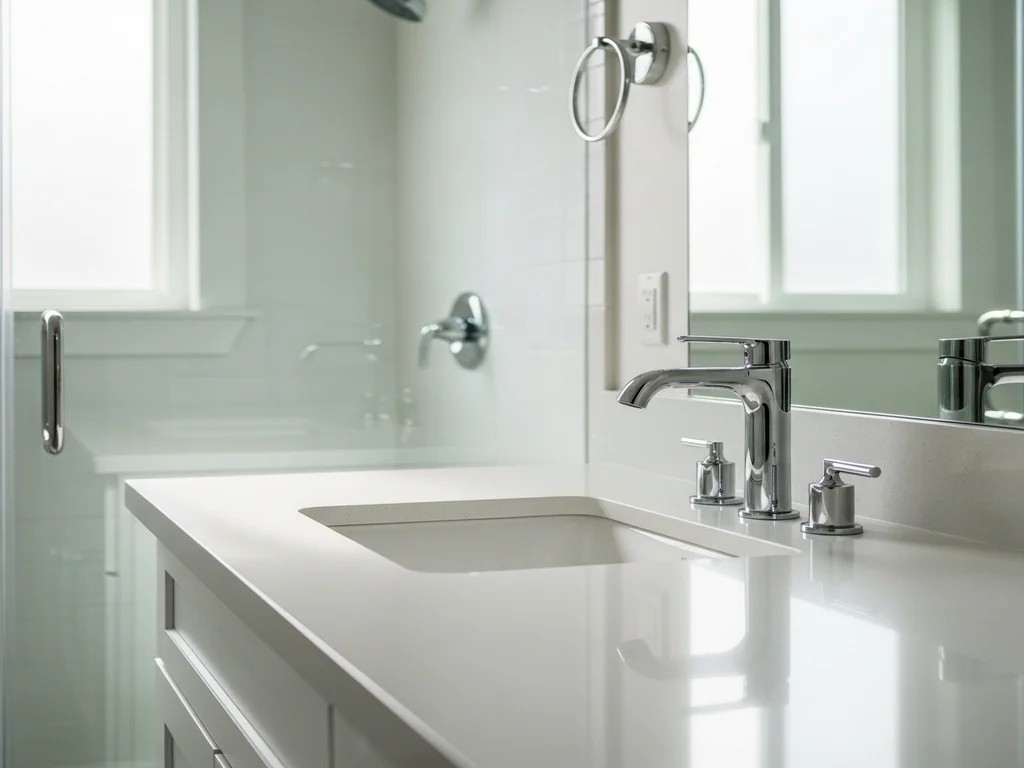
- Quartz counters are non-porous and never need sealing, so hard water cannot soak in — an edge over natural stone in our water. If you love natural stone, plan on keeping it sealed on schedule.
- Porcelain and glazed ceramic tile resist staining well; larger tiles mean fewer grout lines for minerals to discolor.
These same choices pay off in any wet area of the home, which is why we lean on them in every walk-in shower installation as well as full bathroom remodels.
Smarter Fixtures and Fittings
The fittings themselves can help too. A WaterSense-labeled showerhead and a WaterSense faucet trim water use while maintaining performance, and many showerheads now feature rubber nozzle tips you can wipe to clear scale rather than letting it clog the spray. In a region that lives with recurring drought and tightening water-efficiency expectations, those labeled fixtures are an easy win beyond just fighting spots.
Undermount sinks paired with quartz counters wipe clean with no rim to trap film, and a simple squeegee kept in the shower — used after each use — is the cheapest, most effective defense against spots on any glass. Where hard water is especially aggressive, some homeowners add a whole-home water softener, which reduces buildup throughout the house; that is a plumbing decision beyond the bathroom itself, but worth considering if scale is a constant fight. Choosing spot-friendly sinks and faucets is a core part of how our bathroom remodeling team plans a room that stays easy to keep clean.
Ventilation and Why It Matters
Hard water and humidity are a tag team. Every hot shower pushes moisture into the bathroom, and when that moist air condenses on cool glass and fixtures and then evaporates, it leaves behind the very mineral spots you are trying to avoid — and feeds mildew in the bargain.
That is why a properly sized, exterior-vented exhaust fan is part of the answer to hard-water spotting, not just moisture control. Clearing humid air quickly means less condensation settling on surfaces to dry into spots, and it protects paint, trim, and drywall from long-term moisture damage. A remodel is the right moment to correct an undersized or improperly vented fan, since the walls and ceiling are already open. Pairing the right finishes with the right ventilation is how we keep a Sacramento-area bathroom looking its best — whether it is a full remodel or a focused tub-to-shower conversion.
What faucet finish is best for Sacramento's hard water?
Brushed and matte finishes — brushed nickel, matte black, brushed gold — hide mineral spotting far better than polished chrome, which shows every water mark. They are the practical choice for keeping a Sacramento-area bathroom looking clean between deep cleanings, and they suit current design styles well.
Is quartz or granite better with hard water?
Quartz has a small edge because it is non-porous and never needs sealing, so hard water cannot soak in and it wipes clean easily. Granite performs well too, but as a natural stone it needs to be sealed on schedule to resist staining and water spots. Both are good counters; quartz is simply the lower-maintenance option in our water.
Will a walk-in shower with glass just show hard-water spots?
It can, but you can design around it. Treated shower glass with a protective coating resists buildup and cleans more easily, frameless panels have fewer metal channels for scale to collect in, and a squeegee used after each shower keeps spots from forming in the first place. Good ventilation reduces the condensation that leaves spots behind.
Do I need a water softener for my bathroom?
Not necessarily. Choosing spot-resistant finishes, treated glass, non-porous quartz, and good ventilation goes a long way on its own. A whole-home water softener reduces mineral buildup throughout the house and can help if hard water is a constant fight, but it is a separate plumbing decision beyond the bathroom remodel itself.