What Foothill & Tahoe Homes Demand of Flooring
Flooring that thrives in a Sacramento valley home can fail quickly in the foothills or up at Tahoe and Truckee, because the conditions are genuinely different. Mountain and foothill homes deal with snow melt and mud tracked in all winter, wide temperature swings between a cold night and a sunny afternoon, dry indoor air from wood heat, and — at elevation — the humidity shifts that come with a home that's closed up and heated for months, then aired out in summer.
That combination punishes the wrong floor. Materials that absorb water swell and cup; solid hardwood gaps and moves with big humidity and temperature swings; anything slick becomes a hazard with wet boots at the door. The floors that last in a foothill or Tahoe home are dimensionally stable, water-tolerant, and easy to clean. Here are seven options that hold up, and where each one fits best.
1. Luxury Vinyl Plank (LVP)
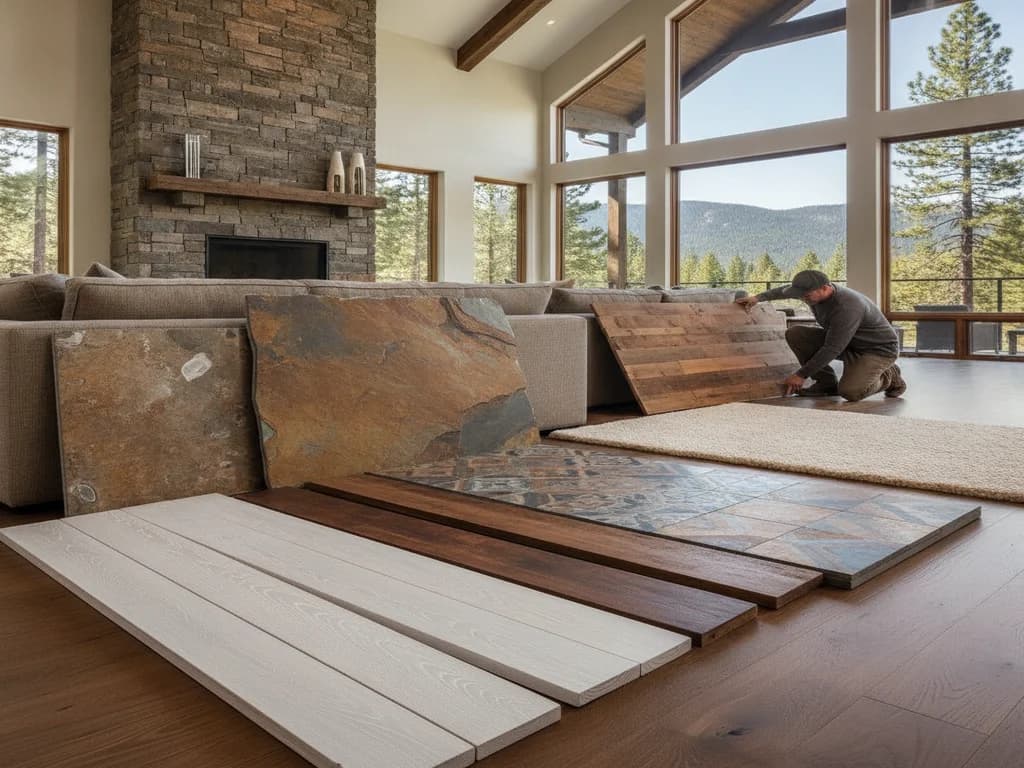
Luxury vinyl plank has become the go-to floor for foothill and mountain homes, and for good reason: it's waterproof or highly water-resistant, dimensionally stable through temperature swings, and tough enough to shrug off wet boots, dog nails, and dragged gear. It handles the snow-melt-and-mud reality of a Tahoe entry far better than wood, while convincingly mimicking the look of hardwood.
For mountain use, choose a quality rigid-core (SPC) product and follow the manufacturer's guidance on acclimation and the temperature range for a home that may sit cold when you're away. Warm underfoot relative to tile and forgiving of moisture, LVP is often the smartest single choice for a mountain great room. See our flooring installation service for how we install it.
2. Porcelain & Ceramic Tile
Porcelain tile is nearly indestructible in the ways that matter for a mountain home — waterproof, scratch-resistant, and completely unbothered by snow melt, mud, or wet boots. It's the ideal surface for entries, mudrooms, and bathrooms where water is a constant, and today's porcelain convincingly imitates wood, stone, or concrete.
Its one drawback is that tile is cold and hard underfoot, which is why it pairs so well with in-floor radiant heat — a popular and comfortable combination in Tahoe and Truckee homes that turns a cold winter floor into a warm one. In wet, high-traffic zones, choose a textured, slip-resistant finish for safety.
3. Engineered Hardwood
If you want the warmth and authenticity of real wood, engineered hardwood — a real-wood veneer over a stable plywood or composite core — is far better suited to foothill and mountain conditions than solid hardwood. The layered core resists the seasonal gapping, cupping, and movement that big temperature and humidity swings cause in solid planks, so it holds up in a home that heats and dries out over a long winter.
It's a good fit for living areas and bedrooms where you want genuine wood underfoot, though it should be kept out of the wettest zones and off homes left unconditioned for long stretches without checking the manufacturer's humidity guidance. For material comparisons on wood generally, our wood vs. composite guide covers how our climate treats real timber.
4. Natural Stone
Natural stone — slate, travertine, and quartzite among them — brings a rugged, timeless look that suits mountain and foothill architecture and stands up to heavy use for generations. Slate in particular is durable, naturally slip-resistant when honed, and handles wet entries gracefully, making it a handsome choice for high-traffic mountain-home floors.
Stone is cold and hard like tile, so it also pairs beautifully with radiant heat, and most stone needs periodic sealing to resist staining and moisture. It's a premium option, but for a Tahoe or foothill home where you want authentic material and lasting durability, stone delivers both.
5. Polished or Sealed Concrete
In homes with a slab foundation, polished or sealed concrete is an underrated, extremely durable option — waterproof when properly sealed, impossible to scratch through in normal use, and a natural fit for radiant heat since the slab itself stores and radiates warmth. It suits modern mountain and foothill designs and handles wet boots and mud without complaint.
Like tile and stone, bare concrete is hard and cold, so radiant heat or area rugs make it comfortable, and the sealer needs occasional maintenance. Where the aesthetic fits, it's one of the toughest and lowest-maintenance floors you can install.
6. Carpet in the Right Rooms Only
Carpet still has a place in a mountain home — just not everywhere. In bedrooms and cozy upstairs living spaces, carpet adds warmth underfoot and sound absorption that feels right in a cabin or foothill home, and it takes the chill off on a cold morning. The mistake is running it into entries, hallways, and living areas that catch snow melt and mud.
Zone your flooring: hard, water-tolerant surfaces where wet boots and traffic land, and carpet reserved for the dry, comfort-first rooms. That strategy gives you warmth where you want it without the maintenance nightmare of carpet in the path of every winter boot.
7. A Dedicated Entry & Mudroom Floor
However you floor the rest of the house, the entry and mudroom deserve their own bombproof surface, because that's where snow, mud, and grit hit hardest. Porcelain tile or stone with a slip-resistant finish, backed by a proper drainage mat and a place to shed boots and gear, keeps the mess contained at the door instead of migrating across your nice floors.
Designing a real transition zone — durable flooring, bench, hooks, and boot storage — is one of the highest-value moves in a foothill or Tahoe home. It protects everything beyond it and makes the daily reality of mountain living far more manageable.
Choosing the Right Floor for Your Home
There's no single best floor for a foothill or Tahoe home — the smart approach is to zone it. Water-tolerant LVP, tile, stone, or sealed concrete where wet boots and traffic land; engineered wood or carpet in the dry comfort rooms; and a bulletproof entry to catch the winter mess before it spreads. Match the material to how each room is used and the climate it faces.
When you're ready to plan a flooring project, request a free estimate and we'll help you choose and install for your home's specific conditions. We work throughout the foothills and up to Truckee and Tahoe City, and we can coordinate flooring with a broader interior remodel if that's part of your plans.
What's the best flooring for a Tahoe or Truckee mountain home?
For most of a mountain home, luxury vinyl plank (LVP) is the strongest all-around choice — it's waterproof, dimensionally stable through temperature swings, and shrugs off snow melt, mud, and wet boots while looking like wood. Porcelain tile or stone with radiant heat is ideal for entries and baths, and engineered hardwood works well in dry living areas and bedrooms. The best result usually zones the home, matching each material to how the room is used.
Why does solid hardwood struggle in foothill and mountain homes?
Solid hardwood expands and contracts with humidity and temperature, and foothill and Tahoe homes see wide swings — cold and dry from wood heat all winter, then aired out and more humid in summer, especially in homes left unconditioned when owners are away. Those swings cause solid planks to gap, cup, and move. Engineered hardwood, with its stable layered core, resists that movement and is the better way to get a real-wood look in these conditions.
Is radiant floor heat worth it in a mountain home?
For many Tahoe and Truckee homeowners, yes — radiant heat turns cold, hard surfaces like tile, stone, and sealed concrete into warm, comfortable floors, which is a meaningful upgrade through a long winter. It pairs naturally with the water-tolerant hard surfaces that make sense in a mountain home. Whether it fits your project depends on your floor plan, heat source, and budget, which we can help you evaluate.
Can I use the same flooring throughout a foothill home?
You can, but zoning usually serves a mountain or foothill home better. Hard, water-tolerant surfaces belong where wet boots and traffic land — entries, mudrooms, kitchens, and baths — while carpet or engineered wood suits the dry comfort rooms like bedrooms. A dedicated, bulletproof entry floor is especially valuable for catching snow and mud before it spreads. Matching the material to each room's exposure gives you the best durability and comfort.