Budgeting a Kitchen Remodel in Folsom & El Dorado Hills
Kitchen remodels in Folsom and El Dorado Hills often involve larger, newer homes than the historic housing stock closer to central Sacramento. That usually means bigger kitchens, higher-end finishes, and homeowner expectations to match — all of which shape the budget. Whether you are updating a builder-grade kitchen or reimagining the whole space, knowing where the money actually goes helps you plan without unwelcome surprises.
A note on numbers: every kitchen is different, and this is not a quote. Costs vary widely with the size of your kitchen, the finishes you choose, structural changes, and current material prices. The goal here is to show you the ten categories that make up a kitchen budget so you can allocate realistically and decide where to invest versus save. For fuller detail, pair this with our Sacramento kitchen remodeling cost guide.
When you are ready for real figures tailored to your home, our kitchen remodeling team can walk your space and put together a transparent estimate.
1. Cabinetry — Usually the Biggest Line
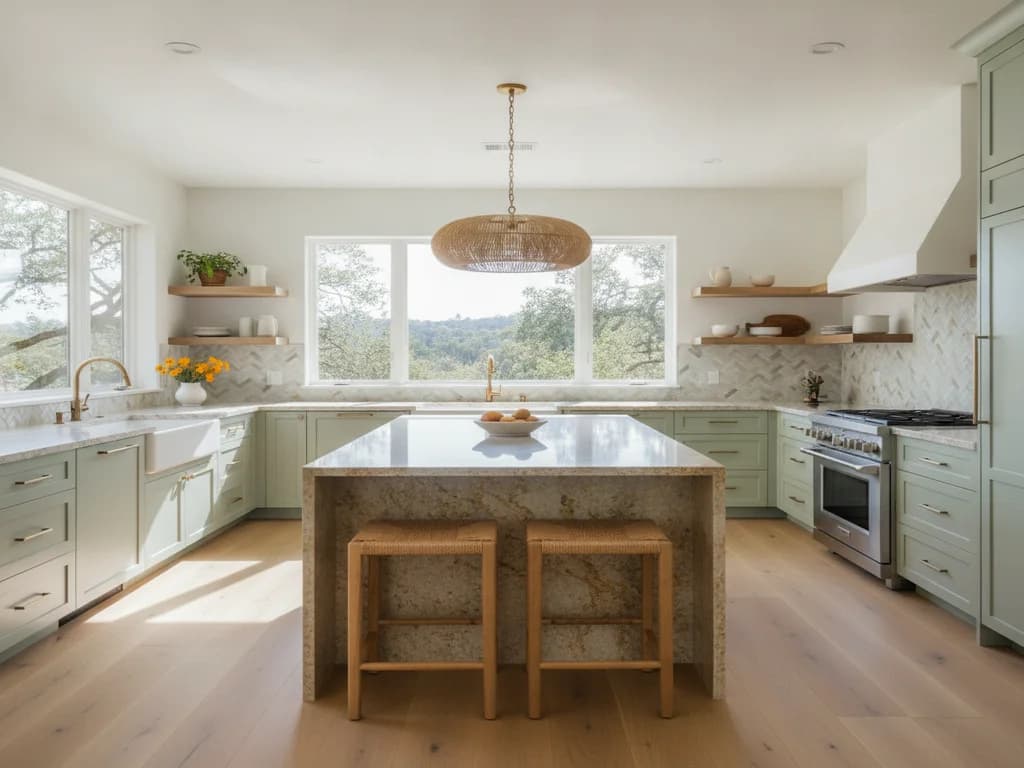
Cabinets typically consume the largest share of a kitchen budget, often a third or more. The range is enormous because the choice between stock, semi-custom, and fully custom cabinetry can multiply the cost several times over. Stock lines keep budgets in check; semi-custom offers more sizes and finishes for a moderate premium; full custom fits unusual layouts and the highest-end look many Folsom and El Dorado Hills homeowners want.
Because cabinetry drives so much of the total, it is the smartest place to decide your priorities first. Our custom vs. semi-custom vs. stock cabinet guide breaks down what each tier includes and where the price jumps happen, so you can steer the whole budget from this one decision.
2. Countertops and Backsplash
Countertops are the second material category most homeowners feel strongly about, and the spread is wide. Engineered quartz is the popular, low-maintenance default in the region thanks to hard water, while natural granite, quartzite, and premium marble sit higher on the scale. Slab quality, edge profiles like a mitered waterfall, and the square footage of a large island all move the number.
The backsplash is a smaller line but easy to overspend on — handmade or specialty tile can cost many times more than a classic subway tile. If you are weighing materials, our quartz vs. granite guide compares durability, maintenance, and cost so you can match the surface to your budget and how hard your kitchen works.
3. Appliances
Appliances are one of the most elastic parts of a kitchen budget. A reliable mainstream package costs a fraction of a professional-grade suite with a large range, built-in refrigeration, and specialty units. In larger Folsom and El Dorado Hills kitchens, homeowners often want that upgraded look, so it is worth deciding early how much of the budget the appliances will claim.
If you are switching to induction or other electric appliances as part of California's electrification push, factor in the electrical work that may come with it. You can compare efficient certified models on the ENERGY STAR site to balance performance against operating cost.
4. Labor and Skilled Trades
Labor is a major and unavoidable share of any quality kitchen remodel. Demolition, carpentry, cabinet installation, tile setting, and finish work all take skilled hands, and good craftsmanship is where a remodel either shines or disappoints. This is not the category to cut corners on — poorly installed cabinets or countertops undermine even the best materials.
Labor costs also scale with complexity: moving walls, relocating plumbing, or intricate tile work all add hours. A reputable, properly licensed contractor gives you a clear labor picture up front. Coordinating these trades is the core of what our general contracting service provides so the schedule and quality stay under control.
5. Plumbing and Electrical Updates
Even in newer homes, moving fixtures or adding an island sink means new plumbing and electrical runs. Relocating a sink, adding a pot filler, or running lines to a mid-room island all add cost. Electrically, modern kitchens need dedicated circuits for appliances and code-required ground-fault protection, and switching to induction may require a new 240-volt circuit and adequate panel capacity.
Folsom and El Dorado Hills homes are generally newer and better wired than historic Sacramento homes, which usually keeps these updates manageable — but they are real budget lines, not afterthoughts. Planning them before layout is locked in prevents costly mid-project changes.
6. Flooring
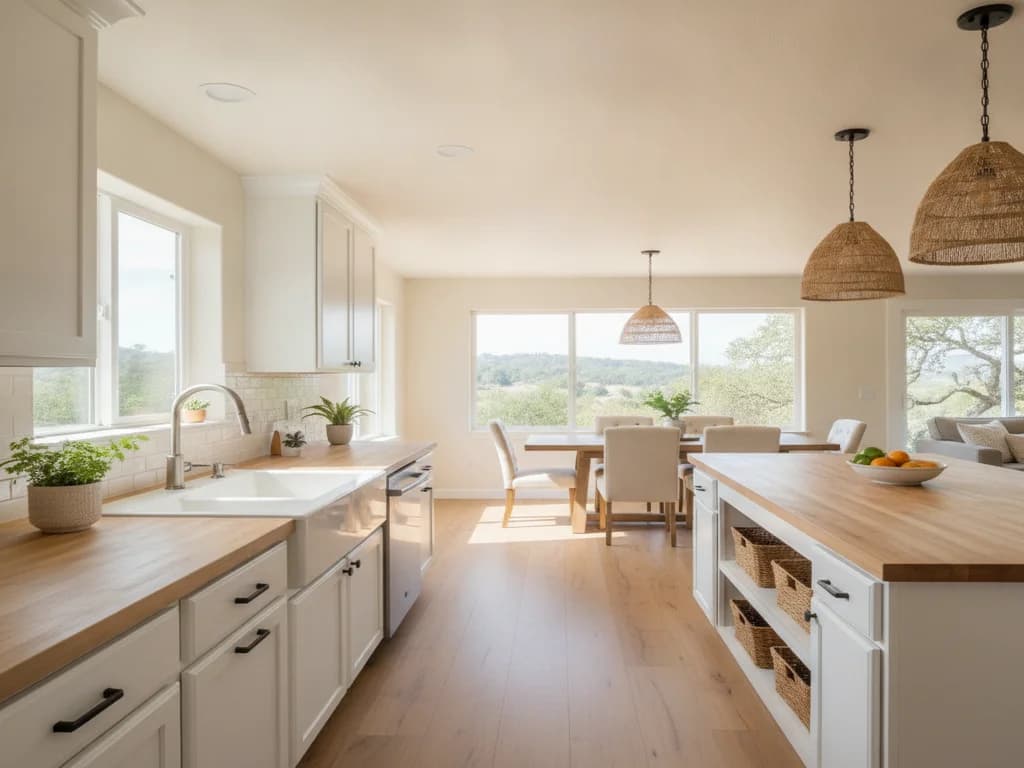
Flooring cost depends on both the material and how much you replace. In an open-concept home, homeowners often extend new flooring beyond the kitchen so the main level flows as one surface, which increases the square footage and the price. Luxury vinyl plank and wood-look tile offer durability at a moderate cost, while real hardwood and porcelain sit higher.
Do not forget subfloor prep and transitions — leveling an uneven subfloor or blending into existing floors adds labor. Our flooring installation team can help you weigh materials against traffic, pets, and how far the new floor should run.
7. Lighting and Fixtures
Lighting delivers high impact for a relatively modest share of the budget, but the pieces add up. A well-lit kitchen layers recessed ceiling lights, under-cabinet LEDs, and pendants over the island, plus dimmers and switching. Faucets, cabinet hardware, and a garbage disposal round out the fixture line — individually small, collectively meaningful.
This is a category where you can genuinely choose your level: designer pendants and premium faucets cost far more than solid mainstream options that look great. Because good lighting transforms how a kitchen feels, it is usually worth protecting this line rather than cutting it.
8. Permits and Title 24 Compliance
Permits and California's Title 24 energy standards are real, budgetable costs, not optional extras. Kitchen remodels that touch electrical, plumbing, or structure require permits from the city of Folsom or El Dorado County, and inspections that go with them. Title 24 also sets efficiency requirements — for example, high-efficacy lighting and, where you enlarge windows or doors, proper glazing.
Skipping permits can create expensive problems at resale, so responsible remodelers build them in from the start. You can read more about the state's energy code at the California Energy Commission, and our California remodeling permits explainer covers what triggers a permit.
9. Design and Project Management
Good design and coordination are worth paying for, and they belong in the budget. Design work — layout, material selection, and 3D visualization — helps you avoid expensive mistakes, and project management keeps a dozen moving trades on schedule. On larger, more complex kitchens, this coordination is often the difference between a smooth remodel and a stressful one.
Some homeowners underestimate this line because it is not a physical product, but skipping it usually costs more through delays and rework. A full-service kitchen remodeling partner folds design and management into a single accountable process.
10. A Contingency for Surprises
Always set aside a contingency — commonly around 10 to 15 percent of the budget — for the unexpected. Even in newer Folsom and El Dorado Hills homes, opening walls can reveal plumbing that needs rerouting, an electrical panel at capacity, or a subfloor that needs leveling. A contingency turns those discoveries into minor adjustments instead of budget-blowing crises.
This is not padding; it is realistic planning. Homeowners who build in a cushion enjoy the remodel far more, because the inevitable small surprises do not threaten the finishes they care about. If nothing goes wrong, you simply have money left over.
Building a Budget You Can Trust
A realistic kitchen budget starts with your priorities: decide where you want to invest — often cabinetry and countertops — and where you are comfortable choosing mainstream options, then account for every category above, including the ones that are easy to forget like permits and contingency. That full picture is what keeps a Folsom or El Dorado Hills remodel on track and stress-free.
Ready for real numbers for your kitchen instead of ranges? Request a free estimate and we will build a transparent, itemized plan around your home. You can also reach our Folsom and El Dorado Hills team at (916) 755-6628.
What usually costs the most in a kitchen remodel?
Cabinetry is typically the single largest line, often a third or more of the total, because the choice between stock, semi-custom, and fully custom can multiply the cost several times over. Countertops and labor are usually the next biggest categories. Deciding your cabinet tier first is the best way to steer the overall budget, since it has the widest price range of any single choice.
Do I need a permit to remodel my kitchen in Folsom or El Dorado Hills?
In most cases involving electrical, plumbing, or structural changes, yes. The city of Folsom and El Dorado County require permits and inspections for that work, and California's Title 24 energy standards apply to items like lighting efficiency and window glazing. Permits are a real budget line, and skipping them can create expensive problems at resale, so a responsible remodel includes them from the start.
How much should I set aside for unexpected costs?
A common guideline is a contingency of about 10 to 15 percent of the budget. Even in newer homes, opening walls can reveal plumbing that needs rerouting, an electrical panel near capacity, or a subfloor that needs leveling. A contingency keeps those discoveries from threatening the finishes you care about, and if nothing goes wrong you simply have money left over.
Where can I save money without regretting it later?
Appliances, backsplash tile, and fixtures are the most elastic categories, where solid mainstream options can look excellent for far less than premium versions. It is generally wiser to protect spending on cabinetry, countertops, and skilled labor, since those are hard and costly to redo. Investing in good design and coordination also tends to save money overall by preventing expensive mistakes and delays.