Aging in Place in the Sacramento Region
More Sacramento-area homeowners are choosing to stay in the homes they love rather than move as they get older — and the bathroom is where that decision is won or lost. It's the room where most falls happen, and it's usually the least forgiving space in an older Land Park bungalow or a 1990s Roseville tract home alike.
The good news: the features that make a bathroom safer for the long haul are the same ones that make it more comfortable and better looking today. Done thoughtfully, an aging-in-place bathroom doesn't look clinical or institutional — it just looks like a well-designed modern bath. Here are ten upgrades we build into Sacramento-area bathrooms with the long haul in mind.
1. A Curbless, No-Threshold Shower
Remove the step you have to climb over
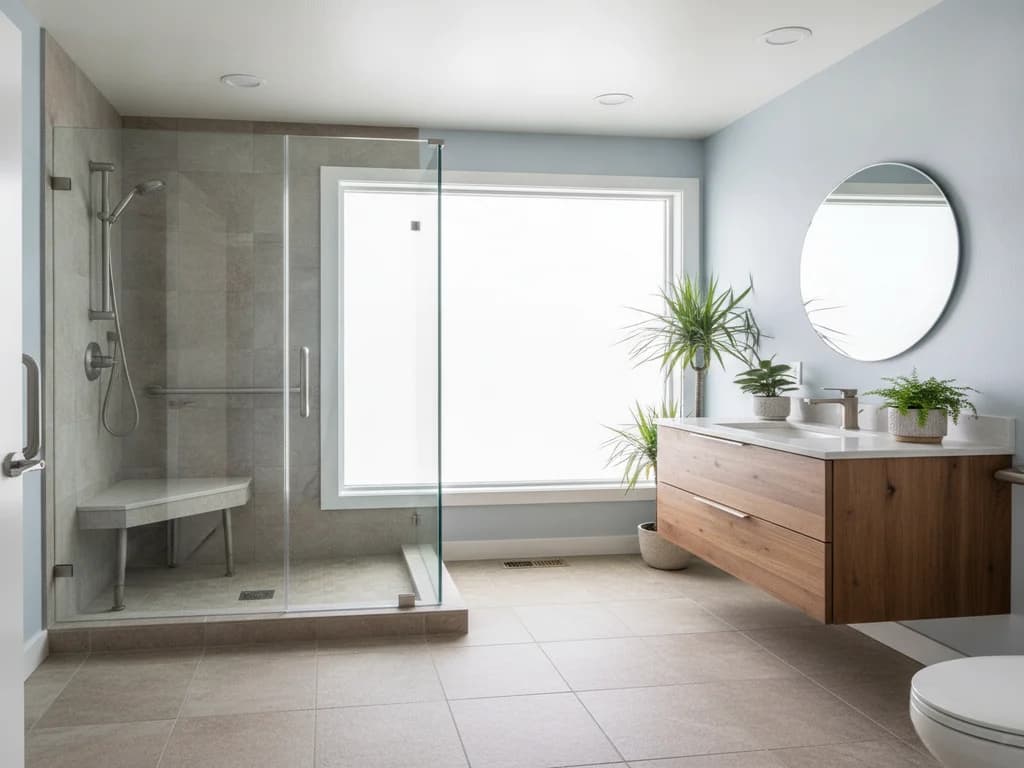
The single most valuable aging-in-place upgrade is a curbless shower — one where the floor runs flush from the room into the shower with no curb to step over. It eliminates the most common trip point in the bathroom, works with a walker or wheelchair if that day ever comes, and happens to make the room look larger and more current right now.
A flush entry depends on careful floor sloping and waterproofing, so it's a job for an experienced installer. Our curbless vs. curbed shower guide explains the drainage details, and our walk-in shower installation service builds them across the region.
2. Real Grab Bars With Blocking Behind the Walls
Anchored into framing, not just screwed to tile
A grab bar is only as strong as what it's anchored to. Bars fastened into hollow tile or drywall with plastic anchors can pull free under real weight — exactly when you need them most. Proper grab bars are mounted into solid blocking installed behind the wall during the remodel, so they can hold a full-body load.
The best time to add blocking is while the walls are open, even if you don't install bars yet — it costs little now and saves a wall-opening project later. Modern grab bars come in finishes that read as towel bars, so they don't broadcast their purpose. The U.S. Access Board publishes the accessibility standards these placements are based on, and our grab bar placement guide covers where they go.
3. A Built-In Shower Bench or Seat
A place to sit that's part of the design
A permanent tiled bench or a fold-down seat lets you shower seated, shave your legs safely, or simply rest — and it's far sturdier and better looking than a plastic shower chair. Built into the shower during construction, it becomes part of the room rather than an obvious accommodation.
Position and height matter: the bench should pair with the handheld shower and a nearby grab bar so everything is within easy reach when seated. It's one of those features that's genuinely nice to have at any age, which is why we include it in so many showers.
4. Slip-Resistant Flooring
Traction where wet feet meet tile
Polished tile looks great and gets dangerously slick when wet. For aging in place, the floor — especially inside the shower — should have real slip resistance, whether that's a textured porcelain, a matte finish, or smaller tiles whose extra grout lines add grip underfoot.
This is a choice you make at material-selection time, and it doesn't mean giving up on looks. Plenty of handsome tiles carry good slip-resistance ratings. Getting it right on the shower floor and the transition into the room is one of the highest-value, lowest-cost safety decisions in the whole project.
5. A Comfort-Height Toilet
A few inches that make sitting and standing easier
A comfort-height (also called chair-height) toilet sits a couple of inches taller than a standard model, which makes lowering onto it and rising from it noticeably easier on knees and hips. It's a small swap with an outsized daily benefit, and it looks identical to any other modern toilet.
Pairing it with a nearby grab bar or a sturdy wall-mounted rail gives a secure handhold for the same motion. A WaterSense-labeled model keeps water use low at the same time. It's the kind of quiet upgrade that pays off every single day without announcing itself.
6. A Handheld Shower and Thermostatic Valve
Flexible spray and scald protection
A handheld showerhead on a slide bar lets you bathe seated, rinse without moving around, and direct the water where you need it — invaluable if mobility changes over time. It's useful for everyone in the household today, from washing kids to cleaning the shower itself.
Pair it with a thermostatic or pressure-balancing valve that holds a set temperature and prevents sudden scalds when someone runs water elsewhere in the house. That scald protection matters most for older adults, whose skin is more vulnerable to burns — and it's a comfort upgrade at any age.
7. An Accessible Vanity and Lever Hardware
Easy to reach, easy to operate
Small ergonomic choices at the sink add up. A vanity with knee clearance can allow seated use; lever faucet handles and lever door hardware are far easier to operate than round knobs for hands with less strength or arthritis; and drawers on smooth full-extension glides beat deep cabinets you have to bend and reach into.
None of these read as accessibility features — they're just good, comfortable design. Our vanity styles guide covers configurations, and our accessible bathroom service brings these details together into a room that works for the long term.
8. Brighter, Layered Lighting
Good light prevents falls and eases aging eyes
Aging eyes need more light to see clearly, and shadows hide hazards. Replacing a single overhead fixture with layered lighting — bright, even ceiling light plus shadow-free light at the mirror — makes the room safer and more comfortable to use. Adding a night light or motion-activated toe-kick light helps with those middle-of-the-night trips.
Layered light is one of the least expensive upgrades with the biggest quality-of-life payoff, and it benefits everyone in the household, not just older users. It's a standard part of how we plan a bathroom.
9. A Wider Doorway and Better Turning Room
Room to move, now and later
A standard bathroom door can be too narrow for a walker or wheelchair. Where the wall allows, widening the doorway — or switching to a pocket or barn-style door that doesn't swing into the room — makes the bathroom accessible without a major reconfiguration later. Inside, planning for a clear turning space future-proofs the layout.
Not every older Sacramento home has the walls to spare, so this is something we assess on-site. Even when a full widening isn't possible, small layout changes can meaningfully improve maneuvering room. The U.S. Access Board guidelines inform the clearances we aim for.
10. Converting a Step-Over Tub to a Walk-In Shower
The change that removes the biggest daily hazard
For many older adults, climbing over the high wall of a bathtub is the scariest part of the day. Converting a step-over tub to a curbless walk-in shower removes that hazard entirely and folds in the bench, grab bars, handheld shower, and slip-resistant floor all at once. It's the upgrade that ties this whole list together.
Because most Sacramento-area homes keep a tub in another bathroom, converting the primary or most-used tub rarely hurts resale. Our tub-to-shower conversion service and our walk-in shower vs. bathtub guide walk through the decision.
Planning an Aging-in-Place Bathroom That Still Looks Great
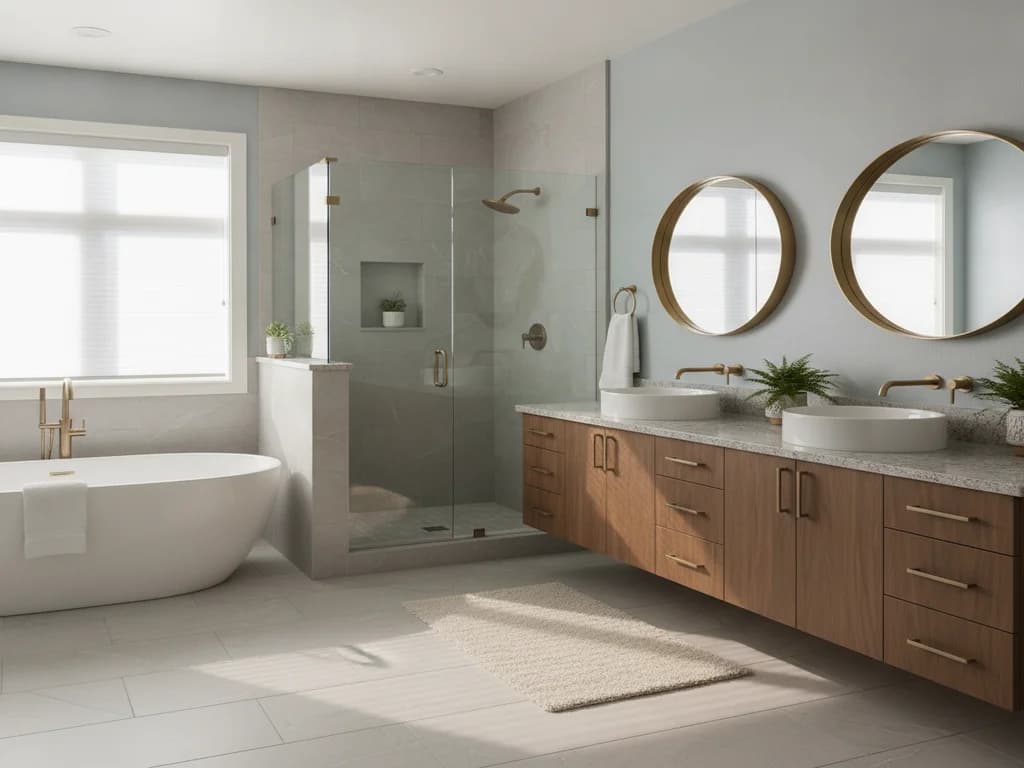
The best aging-in-place bathrooms don't look like they were built for aging at all — they look like handsome, modern baths that happen to be safe and easy to use. The key is building the structural pieces (blocking, curbless drainage, wider access) in during the remodel, when they're straightforward, rather than retrofitting them under pressure later.
AlderStone Remodel designs and builds accessible, aging-in-place bathrooms across Sacramento, Roseville, Rocklin, and the surrounding communities. We tailor each project to your home and how you want to live in it for the years ahead. To start the conversation, request a free estimate or call (916) 755-6628.
Will an aging-in-place bathroom look institutional?
It doesn't have to. Modern grab bars look like towel bars, curbless showers look larger and more current, comfort-height toilets look like any other toilet, and slip-resistant tile comes in handsome finishes. Designed well, the room simply reads as an attractive, up-to-date bathroom that also happens to be safe and easy to use for the long haul.
Should I add grab bars now or just prepare for them?
At minimum, install solid blocking behind the walls during any remodel, even if you don't mount bars yet. Blocking costs very little while the walls are open and lets you add sturdy, properly anchored grab bars anytime later without tearing into the wall. Many homeowners go ahead and install bars now in finishes that blend in, since they're genuinely useful at any age.
Is converting our only tub to a shower a mistake for resale?
It depends on the house. If your home has a tub in another bathroom, converting the primary or most-used one to a walk-in shower generally protects resale while greatly improving daily safety. If it's your only tub, it's worth weighing against buyer expectations in your neighborhood — that's a decision to talk through rather than assume either way.
Can these upgrades be done a few at a time?
Yes, though some are far cheaper to build in during a single remodel. Curbless drainage, in-wall blocking, a wider doorway, and layered lighting are much easier to do while the room is already opened up. Others, like a comfort-height toilet or a handheld shower, can be added on their own later. We can help you prioritize based on your timeline and budget.